Rocket.Chat
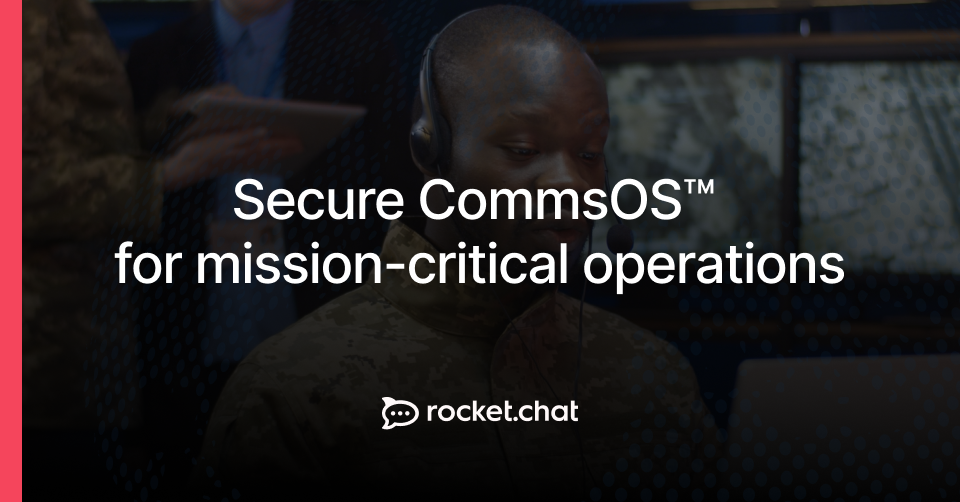
Open-source secure CommsOS
Freemium
Unterstützte Plattformen
web
Was ist Rocket.Chat
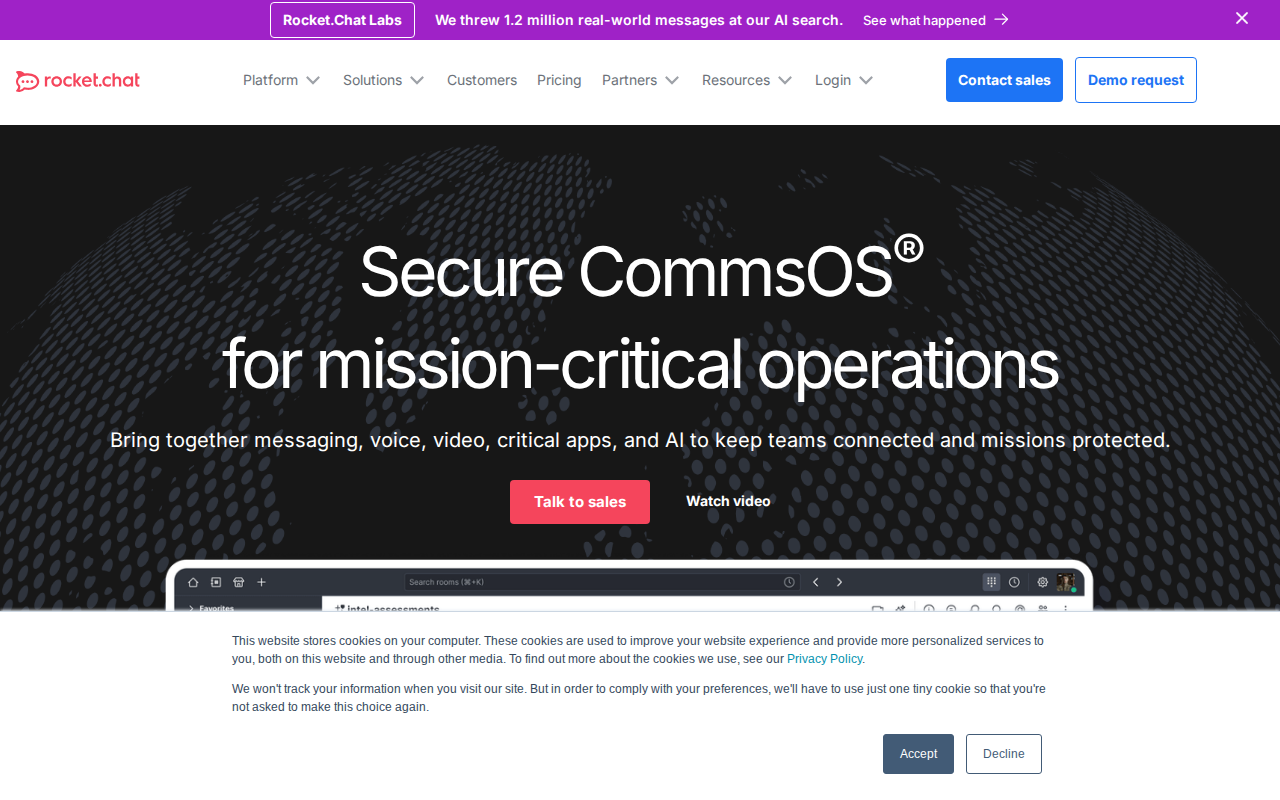
Rocket.Chat is an open-source, self-hosted communications platform designed for organizations requiring total data sovereignty and high-security standards. Unlike proprietary SaaS alternatives like Slack or Microsoft Teams, Rocket.Chat provides a 'CommsOS' architecture that allows for deep customization, on-premise deployment, and full control over metadata. It supports omnichannel messaging, integrating internal team collaboration with external customer support channels. Built on a Node.js and MongoDB stack, it offers a robust API for workflow automation, making it the preferred choice for government, healthcare, and enterprise sectors that cannot compromise on data privacy or regulatory compliance.
Hauptfunktionen von Rocket.Chat
Full Data Sovereignty
Unlike cloud-only platforms, Rocket.Chat allows for complete on-premise hosting. This ensures that all chat logs, file attachments, and user metadata remain within your infrastructure, satisfying strict GDPR, HIPAA, and SOC2 compliance requirements. By eliminating third-party data access, organizations maintain total control over their communication audit trails and security posture.
Omnichannel Customer Support
The platform aggregates messages from WhatsApp, Facebook Messenger, Telegram, and live website chats into a single interface. This allows support teams to manage external inquiries alongside internal team discussions. By using a unified queue system, agents can handle multiple channels simultaneously, reducing response times and improving operational efficiency through automated routing and bot integrations.
Extensible Apps Engine
Rocket.Chat features a powerful Apps Engine that allows developers to extend functionality using TypeScript. You can build custom slash commands, automated bots, or complex workflow integrations that trigger actions in external systems like Jira or Salesforce. This modularity ensures the platform adapts to specific business logic rather than forcing teams to conform to rigid, pre-built workflows.
End-to-End Encryption (E2EE)
Rocket.Chat supports E2EE for private and direct messaging, ensuring that even server administrators cannot intercept or read sensitive communications. By utilizing the OTR (Off-the-Record) protocol or native E2EE implementations, the platform provides a secure layer for high-stakes discussions, making it suitable for intelligence, legal, and sensitive corporate environments where information leakage is a critical risk.
Federation Capabilities
The platform supports Matrix-based federation, allowing users to communicate securely across different Rocket.Chat instances or other Matrix-compatible servers. This is essential for large organizations with multiple subsidiaries or cross-company collaborations, enabling seamless communication without requiring guest accounts or external access to the primary corporate network, thereby maintaining security boundaries while fostering connectivity.
Wie man Rocket.Chat verwendet
- Choose your deployment method: Docker, Snaps, or manual installation on a Linux server (Ubuntu/Debian recommended).,2. Configure the MongoDB database instance and set up the Rocket.Chat server environment variables.,3. Access the web interface via your server IP or domain to complete the initial administrator account setup.,4. Navigate to the 'Administration' panel to integrate LDAP, SAML, or OAuth for centralized identity management.,5. Use the 'Apps Engine' to install marketplace plugins or build custom integrations using the Rocket.Chat REST API.,6. Deploy the mobile or desktop clients and point them to your custom server URL to begin secure communication.
Anwendungsfälle von Rocket.Chat
Secure Enterprise Collaboration
Large corporations use Rocket.Chat to replace Slack, keeping sensitive intellectual property and internal discussions on private servers. This prevents data leakage and ensures compliance with internal security policies while providing a familiar, high-performance chat experience for thousands of employees.
Government & Public Sector
Government agencies deploy Rocket.Chat to ensure that classified or sensitive communications are never stored on public cloud infrastructure. It provides the necessary audit logs and security controls required for public sector digital sovereignty.
Omnichannel Support Centers
Customer support teams use the platform to centralize inquiries from various social media and messaging apps. By routing these to a single dashboard, they improve agent productivity and ensure no customer request is missed, regardless of the entry point.
Wer profitiert von Rocket.Chat
DevOps & IT Managers
They need a communication tool that can be self-hosted, containerized, and integrated into existing CI/CD pipelines. They prioritize security, uptime, and the ability to manage infrastructure independently.
Compliance & Security Officers
They require strict control over data residency and audit trails. Rocket.Chat allows them to enforce data retention policies and ensure that sensitive information never leaves the corporate firewall.
Enterprise Software Architects
They look for a highly extensible platform that can be customized via APIs and plugins to fit unique business workflows, avoiding the limitations of 'walled garden' SaaS products.
Preise für Rocket.Chat
Open-source Community edition (MIT license). Cloud-hosted plans start at $7/user/mo (Pro) and $15/user/mo (Enterprise) with advanced security features.