Refine: Build Enterprise Grade Internal Tools With AI
Build Internal Tools with AI
Freemium
Support platforms
web
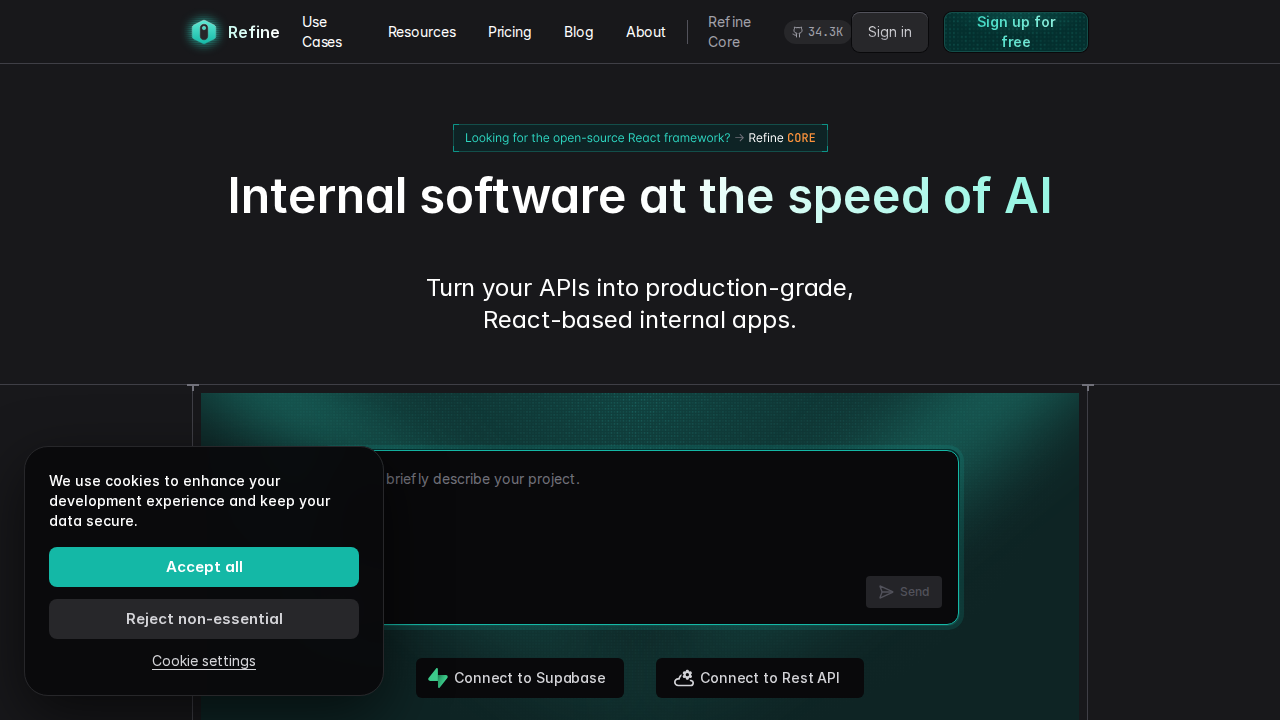
What is Refine: Build Enterprise Grade Internal Tools With AI
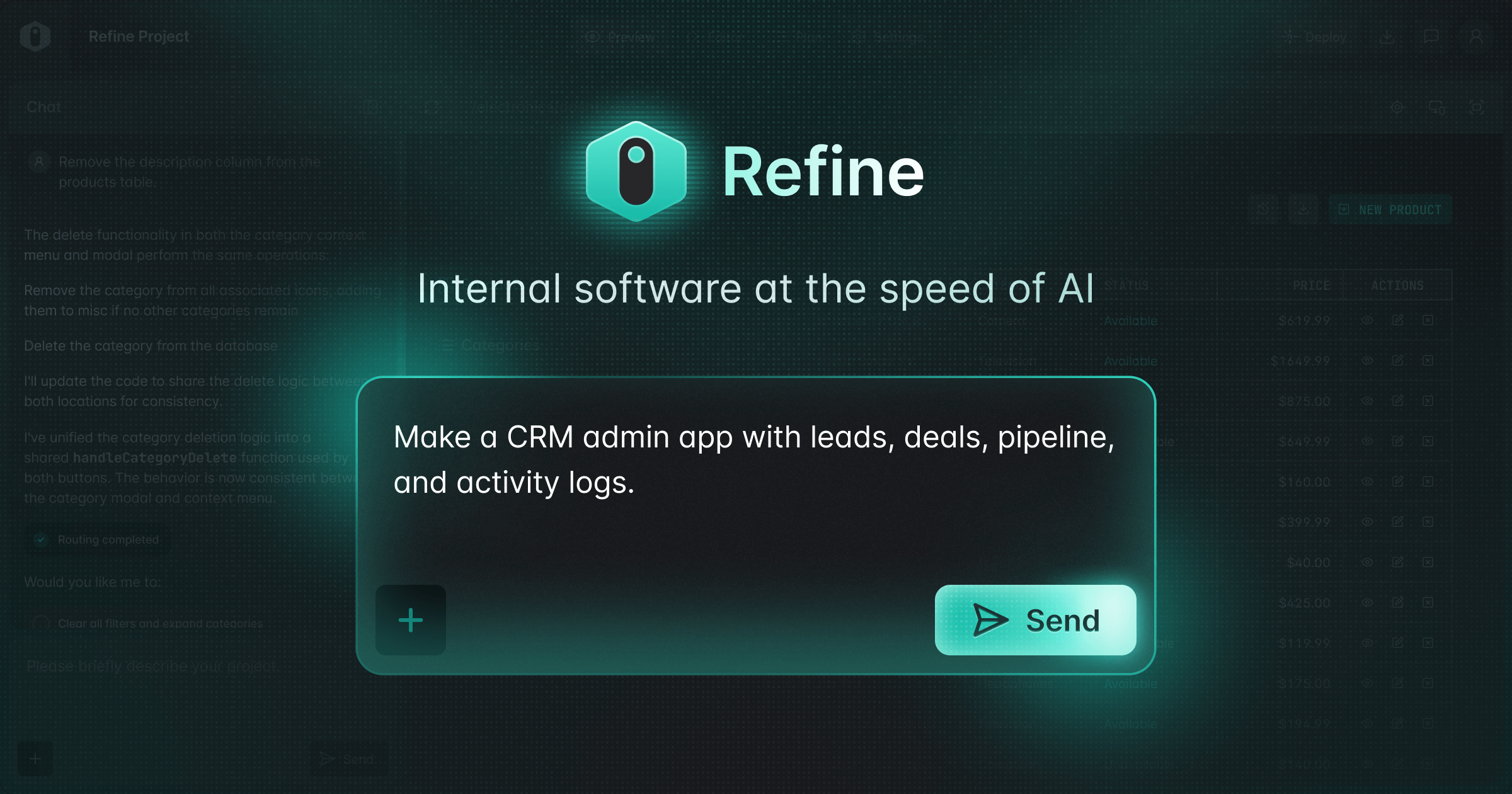
Refine.dev is a framework designed for building enterprise-grade internal tools with AI capabilities. It accelerates development by providing pre-built components and integrations, allowing developers to focus on business logic rather than boilerplate code. Unlike traditional internal tool builders that require extensive manual coding, Refine.dev leverages AI to automate tasks like data fetching, UI generation, and API integration. This results in faster development cycles and reduced maintenance overhead. Refine.dev stands out by offering a declarative approach, enabling developers to define tool behavior through configuration rather than complex code. It's ideal for teams needing to quickly create and maintain internal applications for data management, workflow automation, and operational efficiency.
Refine: Build Enterprise Grade Internal Tools With AI 's Core features
AI-Powered Code Generation
Refine.dev utilizes AI to generate code snippets and UI components based on your data models and requirements. This significantly reduces development time by automating repetitive tasks, such as creating forms, tables, and data visualizations. The AI analyzes your data structure and suggests optimal UI elements, saving developers hours of manual coding and testing. This feature is powered by a proprietary AI model trained on a vast dataset of internal tool patterns.
Declarative UI Framework
Refine.dev uses a declarative approach, allowing developers to define the behavior and appearance of their internal tools through configuration files rather than writing extensive code. This simplifies development, improves maintainability, and makes it easier for non-developers to contribute to the tool's functionality. Changes are reflected instantly, and the framework handles the underlying complexities of UI rendering and data management.
Data Provider Agnostic
Refine.dev supports various data providers, including REST APIs, GraphQL, and custom data sources. This flexibility allows you to connect to any backend system without being locked into a specific technology. Refine.dev provides adapters for popular APIs and databases, simplifying the integration process. This ensures compatibility with existing infrastructure and allows for seamless data retrieval and manipulation.
Built-in Authentication & Authorization
Refine.dev offers built-in support for authentication and authorization, simplifying the process of securing your internal tools. It integrates with popular authentication providers and allows you to define granular access control rules based on user roles and permissions. This ensures that sensitive data and functionalities are protected and accessible only to authorized users. The system supports JWT, OAuth, and custom authentication methods.
Customizable UI Components
While Refine.dev generates UI components automatically, it also provides extensive customization options. Developers can modify the generated components using React, allowing for complete control over the look and feel of their internal tools. This flexibility ensures that the tools can be tailored to meet specific branding requirements and user experience preferences. You can override any generated component and add custom logic.
How to use Refine: Build Enterprise Grade Internal Tools With AI
- Install Refine.dev using your preferred package manager (e.g.,
npm install @refinedev/core).,2. Initialize a new Refine project with the commandrefine initand select your desired data provider (e.g., REST API, GraphQL).,3. Define your data models and relationships using Refine's declarative syntax, specifying fields, types, and validation rules.,4. Generate UI components automatically based on your data models, or customize them using React components.,5. Configure authentication and authorization using Refine's built-in features or integrate with your existing systems.,6. Deploy your internal tool to a cloud platform or self-host it, ensuring secure access for your team.
Use cases of Refine: Build Enterprise Grade Internal Tools With AI
Customer Support Portal
Customer support teams can use Refine.dev to build a portal that allows them to quickly access customer data, view support tickets, and manage interactions. This streamlines the support process, reduces response times, and improves customer satisfaction. Agents can easily search for customer information, update ticket statuses, and access relevant documentation, all within a unified interface.
Inventory Management System
Inventory managers can create a system to track stock levels, manage orders, and generate reports. This improves inventory accuracy, reduces stockouts, and optimizes supply chain operations. Users can add new products, update quantities, and generate reports on inventory levels and sales trends, all within a custom-built application.
Sales Dashboard
Sales teams can build a dashboard to monitor key performance indicators (KPIs), track sales leads, and analyze sales performance. This empowers sales representatives with real-time insights, enabling them to make data-driven decisions and improve their sales strategies. The dashboard can display sales figures, lead statuses, and conversion rates.
HR Management Tool
HR departments can create tools for managing employee data, tracking time-off requests, and generating reports. This simplifies HR processes, improves data accuracy, and enhances employee experience. HR staff can easily access employee records, approve leave requests, and generate reports on employee performance and attendance.
Who benefits from Refine: Build Enterprise Grade Internal Tools With AI
Software Engineers
Software engineers benefit from Refine.dev by accelerating the development of internal tools. The framework reduces the amount of code they need to write, allowing them to focus on more complex tasks and deliver projects faster. This leads to increased productivity and faster time-to-market for internal applications.
Front-End Developers
Front-end developers can leverage Refine.dev to quickly build user interfaces for internal tools. The framework provides pre-built UI components and a declarative approach, making it easier to create and customize interfaces. This allows front-end developers to focus on user experience and visual design.
Full-Stack Developers
Full-stack developers can utilize Refine.dev to streamline the entire development process of internal tools. The framework handles both front-end and back-end aspects, allowing them to build complete applications with less effort. This results in faster development cycles and reduced complexity.
Pricing of Refine: Build Enterprise Grade Internal Tools With AI
Refine.dev offers a free, open-source version under the MIT license. Pricing for cloud-hosted services is not explicitly stated on the website, but a freemium model is likely.
More similar tools like Refine: Build Enterprise Grade Internal Tools With AI
Lovable
Lovable is an AI tool that allows users to create apps and websites through chat interactions.
Framer
Framer is a powerful design tool for creating websites quickly and efficiently, integrating CMS, SEO, and analytics.
Base44
Base44 is an AI-powered platform that allows users to create fully-functional apps without coding.