ThingsBoard — Open-source IoT (Internet of Things) Platform
Open-source IoT Platform
Freemium
Support platforms
web
What is ThingsBoard — Open-source IoT (Internet of Things) Platform
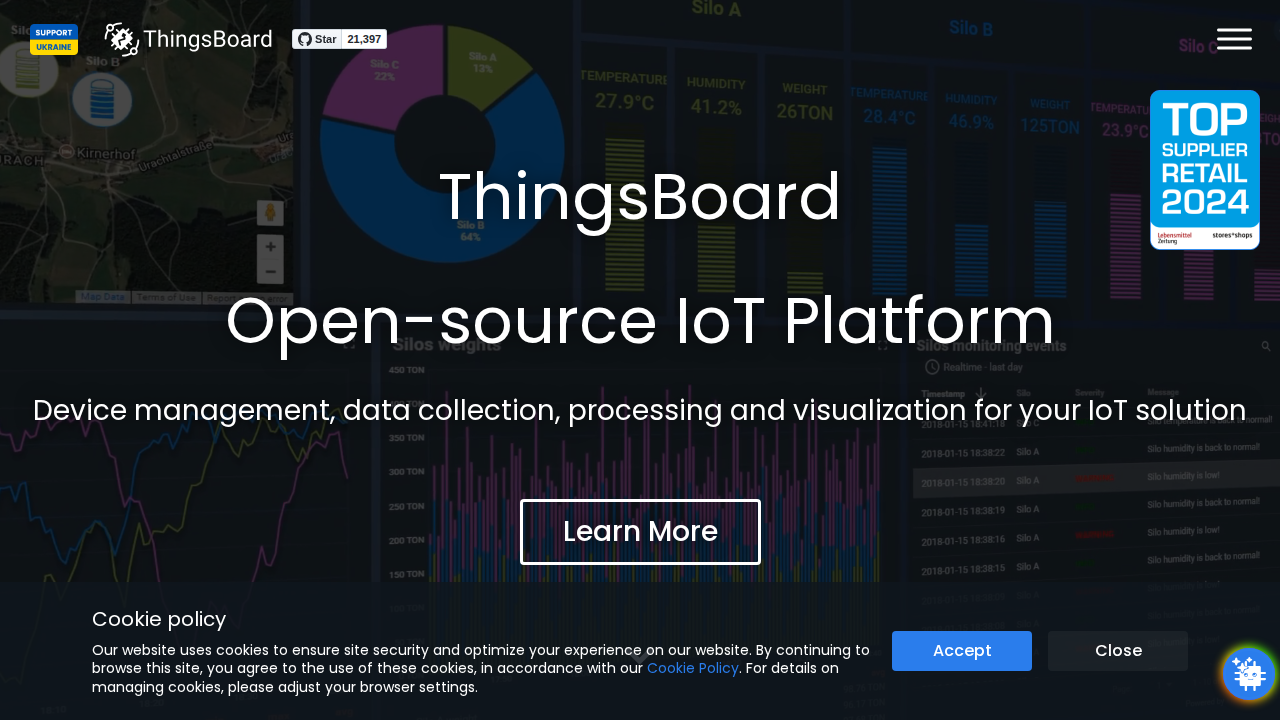
ThingsBoard is an open-source IoT platform designed for device management, data collection, processing, and visualization. It provides a comprehensive solution for building and deploying IoT projects, offering features like device provisioning, data storage, rule engines, and customizable dashboards. Unlike proprietary platforms, ThingsBoard offers complete control and flexibility, allowing users to host it on-premise or in the cloud. It leverages technologies like MQTT, CoAP, and HTTP for device connectivity, and supports various data storage options, including Cassandra, PostgreSQL, and TimescaleDB. This makes it ideal for businesses and developers seeking a scalable, customizable, and cost-effective IoT solution. It benefits those in smart agriculture, industrial automation, and smart city initiatives.
ThingsBoard — Open-source IoT (Internet of Things) Platform 's Core features
Device Management
Provides comprehensive device management capabilities, including device provisioning, remote configuration, and over-the-air (OTA) updates. Supports various device protocols such as MQTT, CoAP, and HTTP, enabling seamless integration with a wide range of IoT devices. This simplifies the process of onboarding and managing a large number of devices, reducing operational overhead and ensuring efficient device lifecycle management.
Data Collection & Storage
Offers robust data collection and storage capabilities, supporting various data formats and protocols. It integrates with popular databases like Cassandra, PostgreSQL, and TimescaleDB, providing scalable and reliable data storage solutions. The platform can handle high volumes of data from connected devices, ensuring data integrity and availability for real-time analysis and historical reporting. Supports data compression to reduce storage costs.
Rule Engine
Features a powerful rule engine that allows users to define complex data processing and event-driven actions. The rule engine enables real-time data transformation, filtering, and aggregation. It supports custom rules written in JavaScript, allowing for flexible and tailored data processing logic. This enables users to create custom alerts, notifications, and automated actions based on device data and events.
Data Visualization
Offers customizable dashboards and widgets for visualizing device data in real-time. Users can create interactive dashboards with various chart types, gauges, and maps to monitor device performance and gain insights. The platform supports drag-and-drop dashboard creation, making it easy to create custom visualizations without coding. Supports role-based access control for secure data access.
Scalability & Flexibility
Designed for scalability and flexibility, allowing users to deploy the platform on-premise, in the cloud, or in a hybrid environment. Supports horizontal scaling to handle increasing data volumes and device counts. The open-source nature of the platform allows for customization and integration with other systems. Offers REST APIs for integration with external systems.
How to use ThingsBoard — Open-source IoT (Internet of Things) Platform
- Download and install ThingsBoard using Docker or your preferred method (e.g., Debian package).,2. Access the ThingsBoard web UI through your server's IP address or domain on port 8080 (default).,3. Create a new tenant administrator account to manage your organization's resources.,4. Add devices by creating device profiles and registering devices with unique access tokens.,5. Configure data collection by setting up device connectivity using MQTT, HTTP, or CoAP protocols.,6. Build custom dashboards to visualize device data and create rules to process and react to incoming data.
Use cases of ThingsBoard — Open-source IoT (Internet of Things) Platform
Smart Agriculture
Farmers use ThingsBoard to monitor environmental conditions (temperature, humidity, soil moisture) in their fields. They receive real-time alerts when conditions fall outside optimal ranges, enabling them to make informed decisions about irrigation, fertilization, and pest control, leading to increased crop yields and reduced resource waste.
Industrial Automation
Manufacturers use ThingsBoard to monitor the performance of industrial equipment, such as machines and sensors. They can track key metrics like operating temperature, vibration, and energy consumption. This data helps them predict equipment failures, optimize maintenance schedules, and improve overall operational efficiency, reducing downtime and costs.
Smart City Applications
City planners use ThingsBoard to collect data from various sensors deployed throughout the city. This data includes traffic flow, air quality, and energy consumption. They can use this data to optimize traffic management, improve air quality, and enhance energy efficiency, creating a more sustainable and livable urban environment.
Building Automation
Building managers use ThingsBoard to monitor and control building systems, such as HVAC, lighting, and security. They can remotely adjust settings, monitor energy usage, and receive alerts about potential issues. This leads to reduced energy consumption, improved occupant comfort, and enhanced building security.
Who benefits from ThingsBoard — Open-source IoT (Internet of Things) Platform
IoT Developers
Developers benefit from ThingsBoard's open-source nature, flexibility, and extensive features for building and deploying IoT solutions. They can quickly prototype, customize, and integrate the platform with their existing systems, accelerating their development cycles and reducing time-to-market.
System Integrators
System integrators can leverage ThingsBoard to offer comprehensive IoT solutions to their clients. The platform's scalability, customization options, and support for various protocols enable them to create tailored solutions that meet specific customer requirements, providing a competitive edge.
Businesses with IoT Needs
Businesses across various industries, such as agriculture, manufacturing, and smart cities, can use ThingsBoard to collect, process, and visualize data from their connected devices. This enables them to gain valuable insights, optimize operations, and improve decision-making, leading to increased efficiency and profitability.
Researchers and Academics
Researchers and academics can utilize ThingsBoard for IoT research and experimentation. The open-source nature allows for in-depth analysis and modification of the platform, facilitating the development of new IoT technologies and applications. The platform's flexibility supports various research projects.
Pricing of ThingsBoard — Open-source IoT (Internet of Things) Platform
Open Source (Apache 2.0). Cloud hosted: Free (limited devices), Standard ($99/mo), Professional ($299/mo), and Enterprise (custom pricing). On-premise deployment is free.