Next.js
React Framework for Web Apps
Free
Support platforms
web
What is Next.js
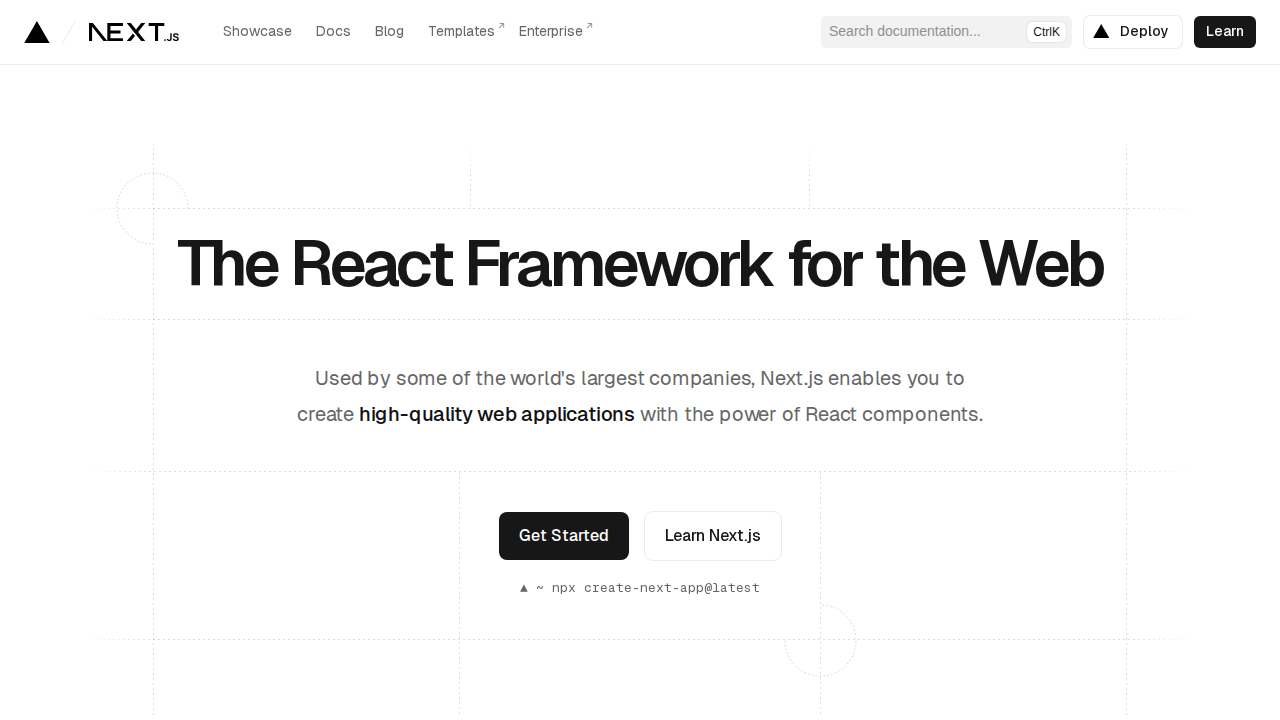
Next.js is a React framework for production, enabling developers to build fast, user-friendly web applications. It offers a suite of features including server-side rendering (SSR), static site generation (SSG), and incremental static regeneration (ISR) for optimal performance and SEO. Next.js distinguishes itself through its file-system-based routing, built-in CSS support, and API route handlers, streamlining development workflows. It also provides advanced features like React Server Components and Server Actions, reducing client-side JavaScript and simplifying data fetching. This makes it ideal for developers and teams looking to create high-performance, scalable web applications with React.
Next.js 's Core features
Server-Side Rendering (SSR)
Next.js supports SSR, rendering React components on the server before sending the HTML to the client. This improves initial page load times, SEO, and social media sharing. Unlike client-side rendering, SSR delivers fully rendered HTML, leading to faster Time to First Byte (TTFB) and better user experience. This is especially beneficial for content-heavy websites.
Static Site Generation (SSG)
Next.js allows generating static HTML pages at build time, ideal for content that doesn't change frequently. SSG results in extremely fast page loads and improved SEO because the content is pre-rendered. This approach is significantly faster than SSR for static content, as the server doesn't need to process requests dynamically. It is perfect for blogs, documentation, and marketing sites.
Incremental Static Regeneration (ISR)
ISR enables updating static pages after they've been built, without rebuilding the entire site. It allows developers to re-render pages at a specified interval or on-demand. This combines the performance benefits of SSG with the flexibility of dynamic content. For example, a blog post can be updated every hour, ensuring fresh content without redeploying the site.
File-System Routing
Next.js uses a file-system-based router, simplifying route creation. Creating a new page is as simple as adding a file to the `pages` directory. This eliminates the need for complex configuration files, making it easier to manage and scale applications. Dynamic routes are supported using file naming conventions (e.g., `pages/posts/[id].js`).
Built-in CSS Support
Next.js provides built-in support for CSS Modules, styled-jsx, and integration with popular CSS-in-JS libraries. This allows developers to style components directly within their JavaScript files, promoting modularity and maintainability. CSS Modules scope styles locally, preventing conflicts. Styled-jsx offers a simple way to write CSS within React components.
API Route Handlers
Next.js allows creating API endpoints within the same project using the `pages/api` directory. This simplifies building backend functionality, such as handling form submissions, connecting to third-party services, or creating authentication flows. These routes are serverless functions, making deployment and scaling straightforward. They can handle GET, POST, PUT, and DELETE requests.
How to use Next.js
- Initialize a new Next.js project using
npx create-next-app@latest my-app.,2. Navigate into your project directory:cd my-app.,3. Start the development server withnpm run devoryarn dev.,4. Create pages by adding files to thepagesdirectory (e.g.,pages/index.js).,5. Implement data fetching usinggetServerSideProps(SSR),getStaticProps(SSG), orgetStaticPaths(SSG with dynamic routes).,6. Deploy your application to Vercel or another hosting provider using the commandnpm run buildfollowed by deployment instructions.
Use cases of Next.js
E-commerce Websites
E-commerce businesses use Next.js to build fast-loading product pages and category listings. They leverage SSR and SSG to improve SEO and user experience, leading to higher conversion rates. Features like ISR allow for frequent updates of product information and pricing without downtime.
Blogs and Content Platforms
Bloggers and content creators use Next.js to build static sites that load quickly and rank well in search engines. SSG and ISR are ideal for generating blog posts and updating content regularly. The file-system-based routing simplifies content management.
Marketing Websites
Marketing teams use Next.js to create landing pages and marketing websites that are optimized for performance and SEO. SSG ensures fast initial load times, while the framework's flexibility allows for custom designs and integrations with marketing tools.
Web Applications with Dynamic Content
Developers building web applications with dynamic content use Next.js to combine the benefits of SSR and client-side rendering. They can fetch data on the server, render the initial HTML, and then hydrate the application on the client-side for a seamless user experience.
Who benefits from Next.js
Frontend Developers
Frontend developers benefit from Next.js's ease of use, performance optimizations, and built-in features for building modern web applications with React. The framework simplifies complex tasks like routing, data fetching, and styling.
Full-Stack Developers
Full-stack developers can use Next.js to build both frontend and backend functionality within a single project. API routes and server-side rendering capabilities streamline the development process and reduce the need for separate backend services.
SEO Specialists
SEO specialists will find Next.js advantageous because of its SSR and SSG capabilities, which improve website crawlability and indexing by search engines. Faster page load times and better performance also contribute to higher search rankings.
Teams Building Performance-Critical Apps
Teams building applications where performance is paramount, such as e-commerce sites or news platforms, will benefit from Next.js's optimizations. Features like ISR and optimized image handling ensure fast loading times and a smooth user experience.
Pricing of Next.js
Next.js is open-source and available under the MIT License. Vercel, the company behind Next.js, offers hosting and additional features with paid plans, but the core framework is free to use.