CodeRabbit
AI-Powered Code Review Automation
Freemium
Support platforms
web
What is CodeRabbit
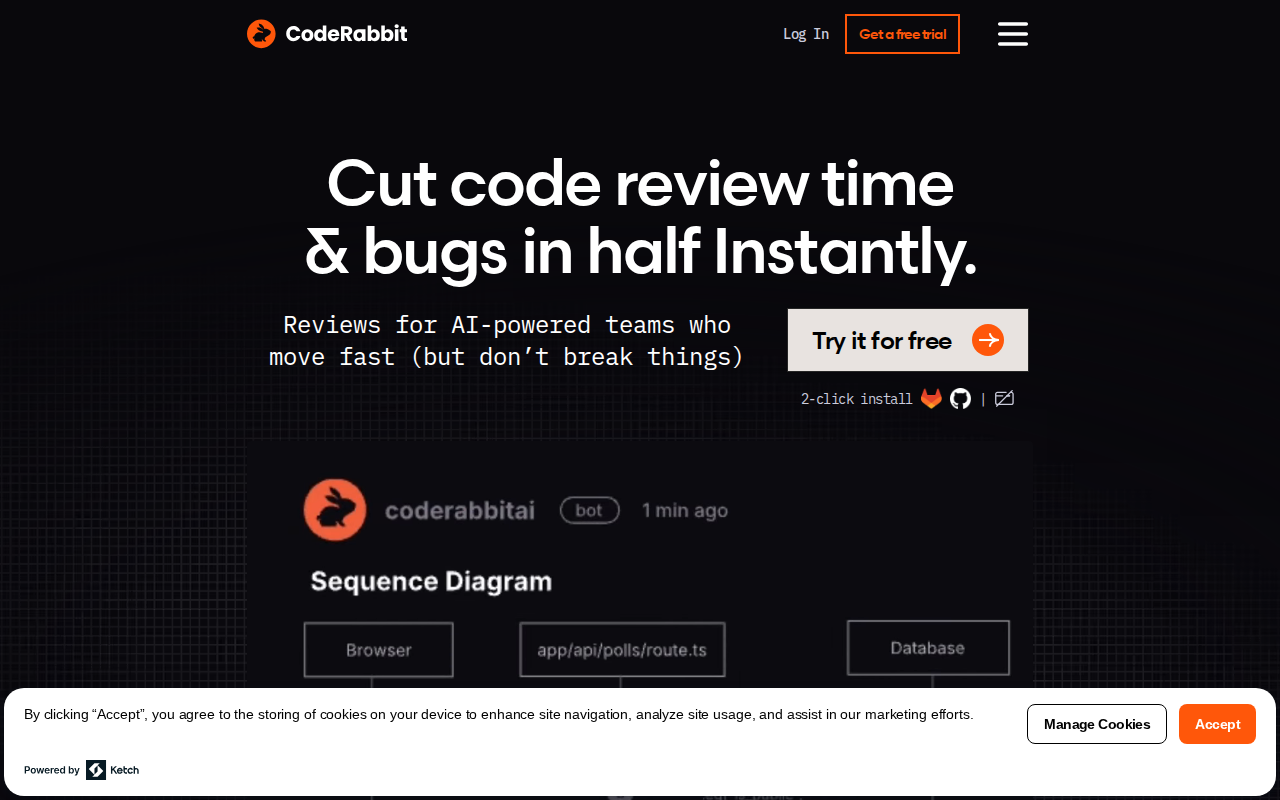
CodeRabbit is an AI-powered code review tool designed to accelerate software development by automating and enhancing the code review process. It helps teams move faster without compromising code quality by identifying bugs, suggesting improvements, and providing comprehensive summaries of code changes. Unlike traditional code review methods, CodeRabbit leverages AI to analyze code, offering features like automated bug detection, code summarization, and architectural diagrams. This tool is ideal for development teams of all sizes, especially those focused on rapid iteration and maintaining high code quality. CodeRabbit's codebase intelligence, external context integration, and customizable guidelines set it apart from other code review tools, offering a more efficient and insightful review experience.
CodeRabbit 's Core features
Automated Bug Detection
CodeRabbit uses AI to identify bugs that humans might miss, including subtle logic errors, security vulnerabilities, and performance bottlenecks. It leverages 40+ linters and security scanners, providing detailed reports and suggestions for remediation. This proactive approach reduces the risk of production issues and improves overall code quality. For example, it can detect potential race conditions in concurrent code, which is a common source of hard-to-find bugs.
Code Summaries & Diagrams
CodeRabbit generates concise summaries and visual diagrams for each pull request, providing quick context for reviewers. These summaries highlight the key changes, making it easier to understand the impact of the code modifications. Architectural diagrams visualize the code's structure and dependencies, helping reviewers grasp the broader context. This feature significantly reduces the time spent understanding complex changes, improving review efficiency.
1-Click Fixes & AI Assistance
CodeRabbit offers 1-click commits for easy fixes and a 'Fix with AI' button for more complex issues. This feature allows developers to quickly address identified problems without manually writing the code. The AI-powered fixes suggest solutions based on the context of the code, reducing the time spent on debugging and improving developer productivity. This feature can resolve common issues like syntax errors and style violations.
Customizable Guidelines
Users can customize CodeRabbit's behavior through a YAML configuration file, allowing them to define coding guidelines, preferred linters, and workflow preferences. This flexibility ensures that the tool aligns with the specific needs and standards of each development team. This customization includes defining code style rules, security best practices, and specific performance metrics to be enforced during the review process.
Contextual Codebase Awareness
CodeRabbit has codebase intelligence, including codegraphs and custom guidelines, to understand complex dependencies across files. It pulls in dozens of context points, including MCP servers, Linked Issues (Jira & Linear), and web queries. This allows CodeRabbit to provide more relevant and accurate reviews, considering the broader impact of code changes. This feature is essential for large projects with complex architectures.
How to use CodeRabbit
- Sign up for a free trial on the CodeRabbit website and connect your code repository (e.g., GitHub, GitLab).,2. Install the CodeRabbit app in your repository to enable automated code reviews on pull requests.,3. Configure your project settings, including coding guidelines and preferred linters, via a YAML configuration file.,4. Create a pull request; CodeRabbit will automatically generate a review with summaries, bug detections, and suggestions.,5. Review the AI-generated feedback, make necessary code changes, and utilize the 'Fix with AI' button for automated fixes.,6. Use the chat feature to interact with the CodeRabbit bot for clarifications, feedback, and issue creation.
Use cases of CodeRabbit
Accelerated Code Reviews
Software development teams can use CodeRabbit to significantly reduce code review times. Developers submit pull requests, and CodeRabbit automatically generates reviews with bug detections, code summaries, and suggestions. This allows reviewers to focus on the most critical aspects of the code, leading to faster feedback cycles and quicker merge times. This is especially useful for teams with tight deadlines.
Improved Code Quality
Developers can leverage CodeRabbit to improve the overall quality of their codebase. The AI-powered bug detection identifies potential issues early in the development cycle. Automated fixes and suggestions help developers write cleaner, more maintainable code. This proactive approach reduces the likelihood of bugs in production and improves the long-term health of the project.
Enhanced Developer Productivity
Developers can use CodeRabbit to streamline their workflow and boost productivity. The tool automates many of the tedious aspects of code review, such as checking for style violations and identifying common errors. Features like 1-click fixes and AI-assisted suggestions save developers time and effort, allowing them to focus on more complex tasks. This leads to faster development cycles and reduced time spent on debugging.
Standardized Codebase
Teams can use CodeRabbit to enforce coding standards and best practices across their codebase. By configuring custom guidelines and linters, teams can ensure that all code adheres to a consistent style and quality level. This standardization improves code readability, maintainability, and collaboration, making it easier for new team members to contribute and understand the project.
Who benefits from CodeRabbit
Software Development Teams
Development teams of all sizes benefit from CodeRabbit by automating code reviews, improving code quality, and accelerating the development cycle. It helps teams move faster without compromising code quality, reducing the time spent on manual reviews and debugging.
Engineering Managers
Engineering managers can use CodeRabbit to improve team productivity and ensure code quality. The tool provides insights into code changes, identifies potential issues, and helps enforce coding standards. This leads to better project outcomes and more efficient resource allocation.
DevOps Engineers
DevOps engineers can leverage CodeRabbit to streamline the CI/CD pipeline and improve the reliability of software releases. The tool integrates with existing workflows, automating code reviews and ensuring that code changes meet quality standards before deployment. This reduces the risk of production issues and improves the overall stability of the system.
Startups and Fast-Growing Companies
Startups and rapidly scaling companies can use CodeRabbit to maintain code quality as their teams and codebases grow. The tool helps automate code reviews, enforce coding standards, and improve developer productivity, enabling these companies to scale their engineering efforts efficiently.
Pricing of CodeRabbit
Free trial available. Contact for Enterprise pricing.