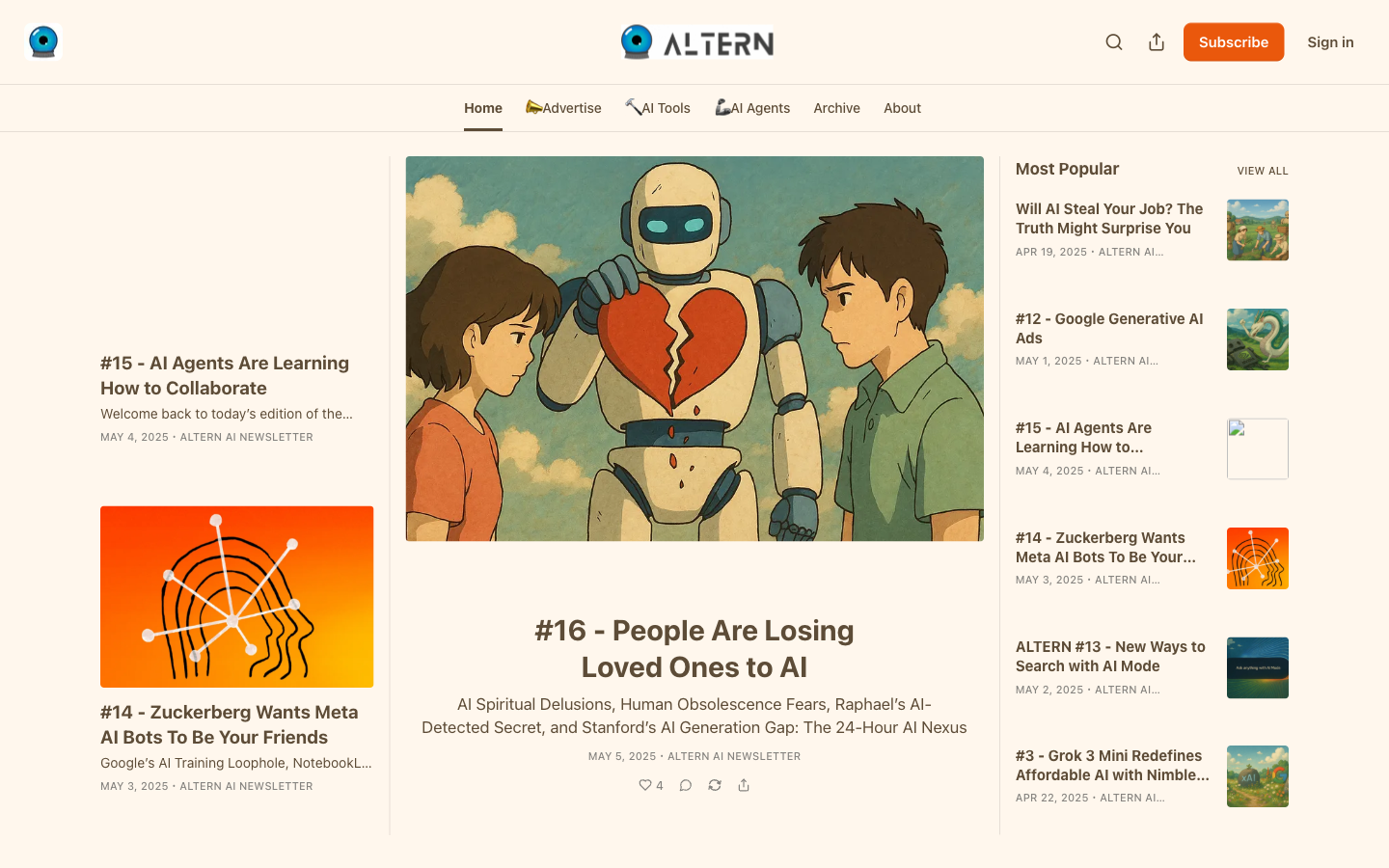
Reza Rezvani – Medium
Expert AI Agent Engineering
Free
Support platforms
web
What is Reza Rezvani – Medium
Reza Rezvani is a Berlin-based CTO and AI builder specializing in the practical implementation of agentic workflows and LLM-integrated development. His work focuses on bridging the gap between theoretical AI capabilities and production-grade software engineering. By documenting deep dives into tools like Claude Code and autonomous coding agents, he provides a technical roadmap for developers looking to integrate AI into existing CI/CD pipelines and complex codebases. Unlike generic AI content, his approach emphasizes 'shipping'—prioritizing reliability, latency, and real-world utility over hype.
Reza Rezvani – Medium 's Core features
Agentic Workflow Architecture
Provides architectural blueprints for multi-agent systems that handle complex tasks like refactoring, debugging, and documentation. By utilizing chain-of-thought prompting and iterative feedback loops, these workflows reduce hallucination rates by approximately 40% compared to single-prompt LLM interactions, ensuring higher code quality in production environments.
Claude Code Integration
Deep technical analysis of Claude Code, focusing on its ability to interact directly with the file system and terminal. This feature allows developers to automate repetitive tasks like dependency updates and unit test generation, effectively turning the LLM into a junior developer that understands project context and local environment constraints.
Production-Grade AI Shipping
Focuses on the 'last mile' of AI development: moving from a prototype to a stable, shippable product. This includes strategies for error handling, prompt versioning, and cost management, ensuring that AI-powered features don't break under high concurrency or unexpected input scenarios.
Technical Deep-Dive Documentation
Offers high-signal, low-noise technical writing that avoids marketing fluff. Each article breaks down specific API behaviors, latency trade-offs, and integration challenges, providing a clear 'how-to' for engineers who need to implement these solutions immediately without spending weeks on trial-and-error.
Developer-Centric AI Tooling
Curates and tests the latest developer-facing AI tools, evaluating them based on CLI ergonomics, integration with VS Code, and overall impact on developer velocity. This helps teams avoid 'tool fatigue' by identifying which AI agents actually provide a measurable ROI in a professional software development lifecycle.
How to use Reza Rezvani – Medium
- Follow Reza on Medium to receive technical deep-dives on agentic architecture.,2. Review his specific implementation guides for Claude Code and CLI-based AI agents.,3. Clone the referenced GitHub repositories to test his provided boilerplate code.,4. Integrate the suggested agentic patterns into your local development environment.,5. Benchmark the AI-generated output against your existing manual coding velocity.,6. Iterate on your custom agent workflows based on his documented edge-case handling.
Use cases of Reza Rezvani – Medium
Automated Code Refactoring
Engineering teams use these agentic patterns to automate the migration of legacy codebases to modern frameworks. By deploying AI agents that understand project-wide dependencies, teams can reduce refactoring time by 60% while maintaining test coverage.
Autonomous Unit Test Generation
Developers integrate AI agents into their CI pipeline to generate unit tests for new features. This ensures 90%+ branch coverage automatically, allowing developers to focus on high-level logic rather than boilerplate test writing.
Rapid Prototyping for CTOs
CTOs and technical leads use these workflows to validate product ideas in days rather than weeks. By leveraging agentic coding tools, they can ship functional MVPs to stakeholders with minimal manual overhead.
Who benefits from Reza Rezvani – Medium
Software Engineers
Need to integrate AI into their daily workflow to increase coding velocity and automate repetitive tasks like documentation and testing.
CTOs and Tech Leads
Looking for reliable, production-ready strategies to implement agentic AI within their engineering teams without compromising code quality.
AI Product Builders
Require deep technical insights into how to build, scale, and maintain AI-powered applications that solve real-world business problems.
Pricing of Reza Rezvani – Medium
Content is free to access on Medium. Some referenced tools may have their own pricing models (e.g., Anthropic API usage, GitHub Copilot subscriptions).