Pagerly
On-call & Incident Management in Slack
Freemium
Support platforms
web
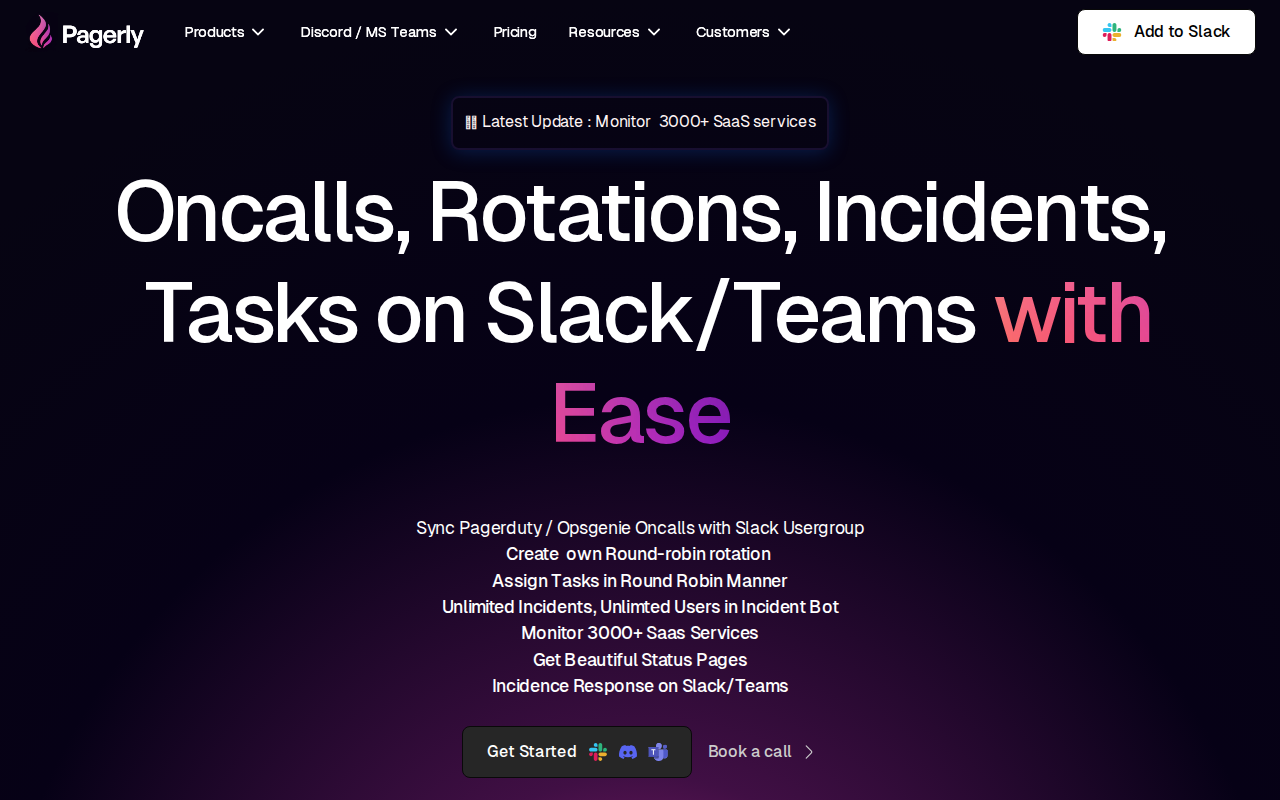
What is Pagerly
Pagerly streamlines on-call management and incident response directly within Slack. It provides automated on-call scheduling, incident ticketing, and real-time operational insights, eliminating the need to switch between multiple tools. Unlike traditional solutions, Pagerly integrates seamlessly with Slack, offering a centralized hub for alerts, notifications, and collaboration. Key features include automated rotations, customizable escalation policies, and detailed incident reports. This approach leverages Slack's existing communication infrastructure to improve response times and reduce operational overhead. Pagerly is ideal for DevOps teams, SREs, and any organization seeking to improve their incident management process and reduce downtime.
Pagerly 's Core features
Slack-Native Integration
Pagerly operates entirely within Slack, providing a unified interface for on-call management, incident response, and team communication. This eliminates the need to switch between applications, reducing context switching and improving team efficiency. All alerts, notifications, and actions are managed directly within Slack channels, fostering real-time collaboration and faster response times.
Automated On-Call Scheduling
Pagerly automates on-call rotations, eliminating manual scheduling and reducing human error. Users can define schedules based on various criteria (e.g., time zones, team availability), and Pagerly automatically handles shift assignments and escalations. This ensures consistent coverage and minimizes the risk of missed alerts, leading to improved uptime and faster incident resolution.
Incident Ticketing & Tracking
Pagerly integrates with ticketing systems, automatically creating and updating tickets for incidents. This streamlines the incident management process, providing a centralized record of issues and their resolution. Users can track incident progress, assign tasks, and collaborate on solutions directly within Slack, improving accountability and facilitating post-incident analysis.
Customizable Escalation Policies
Pagerly allows users to define custom escalation policies, ensuring that alerts reach the right people at the right time. Users can configure multiple levels of escalation, including notifications to different team members or channels based on severity and time. This ensures that critical issues are addressed promptly, minimizing downtime and improving overall system reliability.
Real-time Alerting & Notifications
Pagerly provides real-time alerting and notifications directly within Slack, ensuring that on-call engineers are immediately aware of critical issues. Alerts include detailed information about the incident, enabling faster diagnosis and resolution. Customizable notification settings allow users to tailor alerts to their preferences, ensuring they receive the information they need without being overwhelmed.
Detailed Reporting & Analytics
Pagerly offers comprehensive reporting and analytics, providing insights into on-call performance and incident trends. Users can track key metrics such as mean time to resolution (MTTR), incident frequency, and on-call response times. These insights help teams identify areas for improvement, optimize their on-call processes, and proactively address potential issues.
How to use Pagerly
- Sign up for a Pagerly account and connect your Slack workspace.,2. Create on-call schedules by defining team members, rotation intervals, and escalation policies.,3. Integrate Pagerly with your monitoring tools (e.g., Datadog, Prometheus) to receive alerts in Slack.,4. Configure incident response workflows, including notification channels and automated ticket creation.,5. Use the
/pagerlySlack command to manage on-call schedules, acknowledge alerts, and create incidents.,6. Review incident reports and analytics within Slack to identify areas for improvement.
Use cases of Pagerly
DevOps Teams
DevOps teams use Pagerly to automate on-call rotations, receive real-time alerts in Slack, and streamline incident response. They can quickly identify and resolve issues, reducing downtime and improving overall system reliability. This allows them to focus on development and deployment tasks.
SRE Teams
SRE teams leverage Pagerly to manage service level objectives (SLOs) and ensure high availability. They can monitor key performance indicators (KPIs), receive alerts for SLO breaches, and quickly respond to incidents. This helps them maintain service reliability and meet customer expectations.
Software Development Companies
Software development companies use Pagerly to improve their incident management process and reduce the impact of outages. They can quickly identify and resolve issues, minimizing downtime and improving customer satisfaction. This helps them maintain a positive brand reputation and retain customers.
E-commerce Businesses
E-commerce businesses use Pagerly to ensure their online stores are always available. They can quickly respond to incidents, minimizing downtime and preventing lost sales. This helps them maintain customer trust and maximize revenue.
Who benefits from Pagerly
DevOps Engineers
DevOps engineers need Pagerly to automate on-call rotations, receive instant alerts, and streamline incident response within Slack. This reduces manual effort, improves response times, and allows them to focus on infrastructure management and automation tasks.
Site Reliability Engineers (SREs)
SREs benefit from Pagerly's ability to monitor service level objectives (SLOs), receive alerts for breaches, and quickly respond to incidents. This helps them maintain service reliability, meet customer expectations, and proactively address potential issues.
Software Development Teams
Software development teams need Pagerly to improve their incident management process and reduce the impact of outages. They can quickly identify and resolve issues, minimizing downtime and improving customer satisfaction, leading to better software quality.
IT Operations Teams
IT Operations teams use Pagerly to ensure the smooth running of their IT infrastructure. They can automate on-call schedules, receive alerts, and track incidents, allowing them to proactively manage and resolve issues, minimizing disruptions to business operations.
Pricing of Pagerly
Free plan available. Paid plans with more features and users. Contact for custom pricing.