Cycling '74
Visual Programming for Audio
Freemium
Support platforms
web
What is Cycling '74
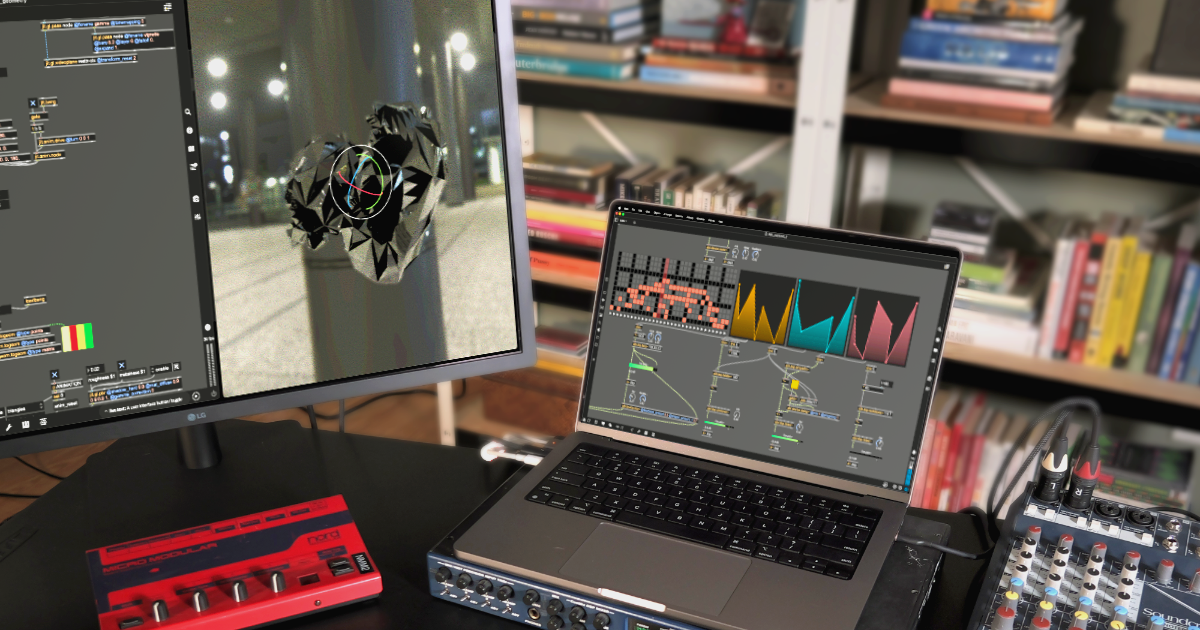
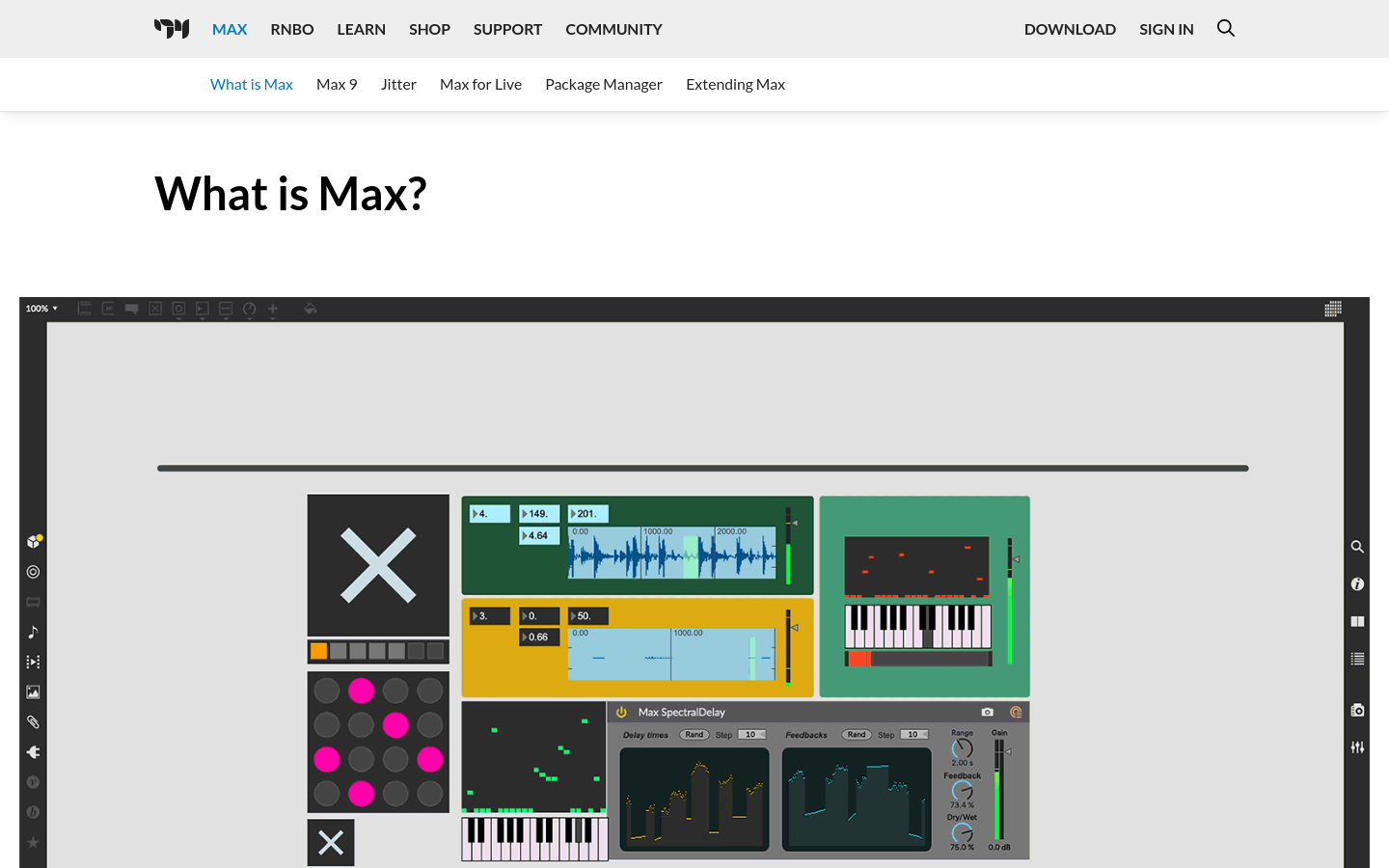
Max is a visual programming environment for music, audio, and interactive media. Unlike traditional text-based IDEs, Max utilizes a dataflow paradigm where users connect 'objects'—representing functions or data processing units—via patch cords. This allows for real-time synthesis, signal processing, and complex algorithmic composition. Its unique strength lies in the integration of MSP (audio processing) and Jitter (matrix-based video/data processing), enabling seamless synchronization between sound and visuals. It is the industry standard for sound designers, interactive artists, and researchers who require low-latency, high-performance execution without the overhead of writing raw C++ code.
Cycling '74 's Core features
Visual Dataflow Programming
Max replaces syntax-heavy coding with a graphical interface where logic is defined by connecting nodes. This paradigm reduces the cognitive load for non-programmers while providing advanced users with a rapid prototyping environment. By visualizing signal paths, developers can debug complex audio chains in real-time, significantly faster than tracing text-based execution logs.
MSP Audio Engine
The MSP (Max Signal Processing) engine handles high-resolution, low-latency audio processing. It operates on a sample-accurate basis, allowing for precise control over digital signal processing (DSP) chains. It supports multi-channel audio I/O and integrates natively with VST/AU plugins, making it a powerful engine for building custom synthesizers, effects processors, and spatial audio environments.
Jitter Matrix Processing
Jitter provides a high-performance framework for processing multi-dimensional data, specifically optimized for video and 3D graphics. By treating video frames as matrices, users can perform complex image manipulation, computer vision, and real-time rendering. It leverages GPU acceleration to maintain high frame rates, even when processing 4K video streams or complex geometry.
Node for Max Integration
The 'node.script' object allows developers to run a Node.js environment directly within a Max patch. This bridges the gap between visual programming and the vast ecosystem of JavaScript libraries. Users can leverage NPM packages for web connectivity, data parsing, or AI model integration, effectively extending Max's capabilities into the realm of modern web and server-side development.
Extensive Package Manager
The built-in Package Manager provides a centralized repository for community-developed externals, tutorials, and libraries. This ecosystem allows users to quickly integrate specialized tools—such as machine learning models (via ml.star), hardware interfaces (Arduino/Serial), or advanced networking protocols (OSC/WebSockets)—without needing to build these integrations from scratch, drastically reducing development time.
How to use Cycling '74
Download and install the Max installer from the Cycling '74 website.,Launch the application and open a new 'Patcher' window (Cmd+N).,Press 'n' to create a new object box and type an object name (e.g., 'cycle~' for an oscillator).,Connect the output of your object to an 'ezdac~' object to route audio to your hardware output.,Click the 'Lock' icon in the bottom-left corner to enable interaction and trigger your patch.,Use the 'Package Manager' to install community-contributed externals and libraries for extended functionality.
Use cases of Cycling '74
Interactive Sound Installation
Artists use Max to map sensor data (via Arduino or cameras) to audio parameters. For example, a motion-tracking installation can trigger generative soundscapes based on visitor movement, creating a unique, responsive acoustic environment in real-time.
Custom Instrument Design
Sound designers build bespoke software synthesizers and effects units. By creating custom interfaces and signal chains, they achieve specific sonic textures that off-the-shelf plugins cannot replicate, often using these tools for live performance or studio production.
Real-time Data Sonification
Researchers use Max to convert complex datasets into audio, allowing them to 'hear' patterns in data. By mapping variables to frequency, amplitude, or timbre, they can identify anomalies or trends in scientific data that are often missed in visual-only analysis.
Who benefits from Cycling '74
Sound Designers
Need granular control over audio synthesis and signal processing. Max allows them to move beyond standard DAW limitations to create unique, high-fidelity sound engines.
Interactive Artists
Require a bridge between physical sensors, visual media, and sound. Max provides the necessary glue to synchronize these disparate elements in a live, performance-ready environment.
Creative Coders
Want to prototype complex algorithms without the overhead of traditional compilation. Max offers a rapid, visual feedback loop that is ideal for experimental music and generative art.
Pricing of Cycling '74
30-day free trial. Perpetual license: $399. Subscription: $9.99/mo (Max) or $12.99/mo (Max + Ableton Live Suite integration).