Harbor
Cloud Native Container Registry
Free
Support platforms
web
What is Harbor
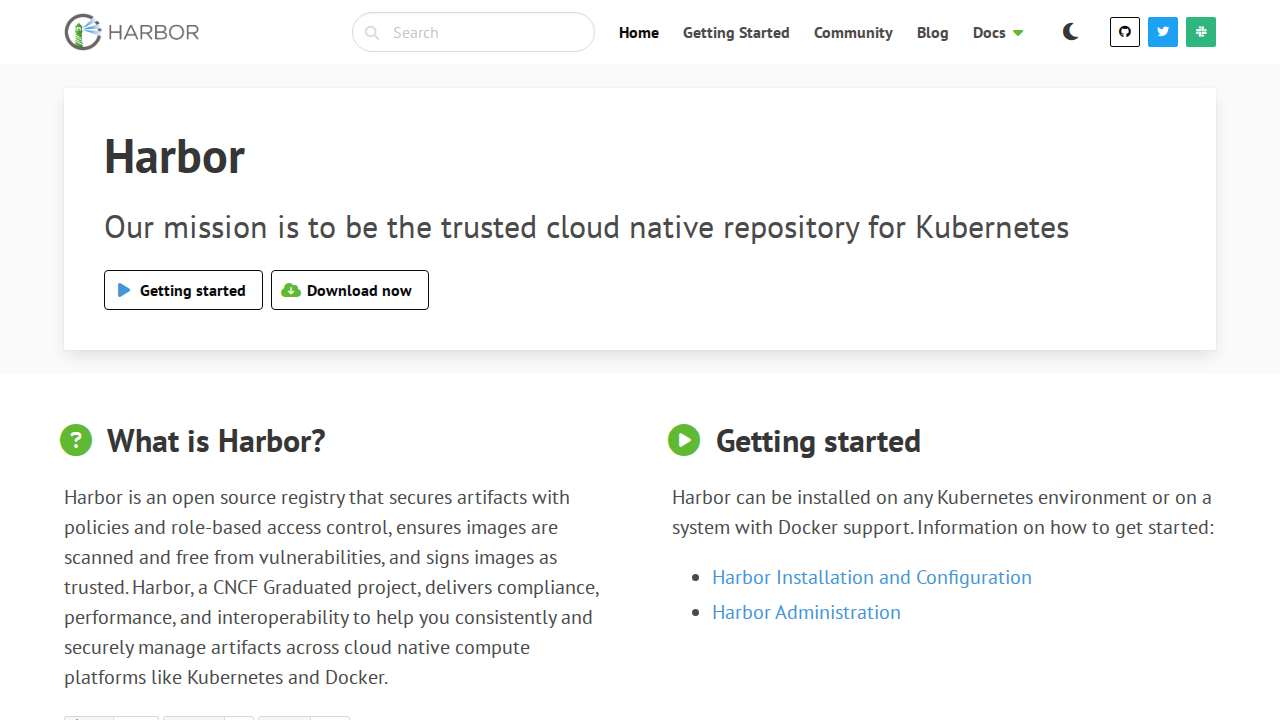
Harbor is an open-source, cloud-native registry that secures and manages container images. It provides policy-based access control, vulnerability scanning, and image signing to ensure the integrity and security of container artifacts. Unlike basic registries, Harbor integrates seamlessly with Kubernetes and Docker, offering features like replication, multi-tenancy, and identity integration. This makes it ideal for organizations needing a robust, secure, and compliant solution for managing container images across various cloud-native platforms. Harbor's focus on security and compliance, combined with its ease of integration, sets it apart from simpler registry solutions.
Harbor 's Core features
Role-Based Access Control (RBAC)
Harbor's RBAC allows granular control over image access. Administrators can define roles and permissions for users and groups, ensuring that only authorized personnel can push, pull, or manage images. This is critical for maintaining security and compliance, especially in multi-team environments. RBAC is integrated with identity providers like LDAP and OIDC for centralized user management.
Vulnerability Scanning
Integrates with vulnerability scanners (e.g., Clair, Trivy) to automatically scan images for known vulnerabilities. Scans are performed regularly, and results are displayed in the Harbor UI. Users can view vulnerability reports, assess risks, and take corrective actions. This proactive approach helps prevent the deployment of vulnerable images.
Image Signing and Validation
Supports image signing using Notary or Cosign to verify the authenticity and integrity of images. Signed images can be validated during the pull process, ensuring that only trusted images are deployed. This feature is essential for supply chain security and preventing the use of tampered or malicious images. It uses industry-standard cryptographic techniques.
Image Replication
Enables image replication between multiple Harbor instances or other registries. This feature is crucial for disaster recovery, high availability, and distributing images across geographically dispersed locations. Replication can be configured with various policies, including automatic and manual replication, and supports filtering based on project and tag.
Multi-Tenancy
Supports multi-tenancy, allowing multiple teams or projects to share a single Harbor instance while maintaining isolation. Each tenant has its own set of projects, users, and permissions. This is ideal for organizations with multiple development teams or customers who need to manage their container images independently.
Extensible API and Web UI
Provides a robust API and a user-friendly web UI for managing images, users, and projects. The API allows for automation and integration with other tools and systems. The web UI offers a visual interface for browsing images, viewing scan results, and managing access control. This combination provides both flexibility and ease of use.
How to use Harbor
- Installation: Choose your deployment method (Kubernetes or Docker). Follow the official documentation for detailed instructions based on your environment.,2. Configuration: Configure Harbor with your desired settings, including storage backend, database, and network settings. This step is crucial for customizing the registry to your needs.,3. User Management: Create users and assign roles to manage access control. Harbor supports various identity providers for seamless integration with existing authentication systems.,4. Image Upload: Use the Docker CLI to push images to your Harbor registry. Ensure you're logged in and using the correct registry URL.,5. Vulnerability Scanning: Enable vulnerability scanning to automatically scan images for security vulnerabilities. Configure the scanner to meet your compliance requirements.,6. Image Replication: Set up replication rules to synchronize images between multiple Harbor instances or other registries for disaster recovery and improved performance.
Use cases of Harbor
Secure CI/CD Pipeline
Development teams use Harbor to store and scan container images built during the CI/CD process. Automated vulnerability scanning identifies and flags security issues before deployment. Signed images ensure that only trusted artifacts are deployed to production, enhancing the security posture of the entire software delivery pipeline.
Kubernetes Deployment
Organizations deploying applications on Kubernetes use Harbor as their private registry. Kubernetes can pull images directly from Harbor, and RBAC ensures that only authorized pods can access specific images. This integration streamlines deployments and enhances security within the Kubernetes cluster.
Multi-Region Deployment
Companies with global infrastructure use Harbor's replication feature to distribute container images across multiple regions. Images are replicated to local Harbor instances, reducing latency and improving application performance for users in different geographic locations. This ensures high availability and a consistent user experience.
Compliance and Auditing
Enterprises in regulated industries use Harbor to meet compliance requirements. Vulnerability scanning, image signing, and detailed audit logs provide the necessary evidence for security audits. RBAC and access control features ensure that only authorized personnel can access and modify container images, maintaining data integrity.
Who benefits from Harbor
DevOps Engineers
DevOps engineers need a reliable and secure registry to manage container images throughout the software development lifecycle. Harbor provides the tools to automate image builds, scans, and deployments, streamlining the CI/CD process and improving overall efficiency.
Security Professionals
Security professionals require a secure registry to protect container images from vulnerabilities and unauthorized access. Harbor's vulnerability scanning, image signing, and RBAC features help enforce security policies and mitigate risks associated with containerized applications.
Kubernetes Administrators
Kubernetes administrators need a registry that integrates seamlessly with Kubernetes. Harbor provides native support for Kubernetes, simplifying image management and deployment within the cluster. This integration enhances the overall Kubernetes experience.
Software Developers
Software developers benefit from a secure and efficient way to store and share container images. Harbor's user-friendly interface and API enable developers to easily push, pull, and manage their images, accelerating the development process and improving collaboration.
Pricing of Harbor
Open Source (CNCF Graduated Project). Free to use under the Apache 2.0 license. No paid tiers or hosted services are mentioned on the website.