ZAP
Open-source web app scanner
Free
Support platforms
web
What is ZAP
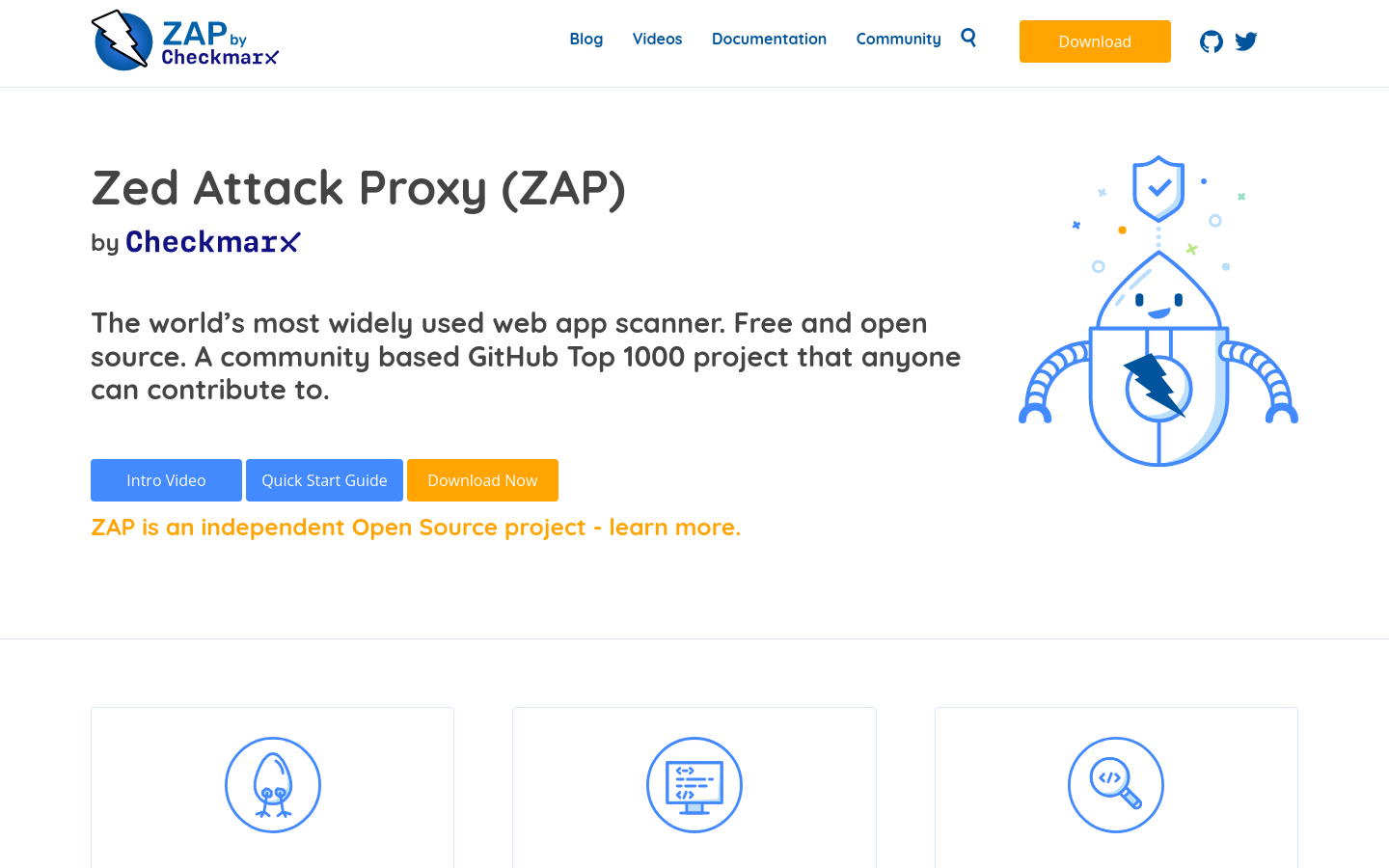
ZAP (Zed Attack Proxy) is the world’s most widely used open-source web application security scanner. It acts as a man-in-the-middle proxy, allowing developers and security professionals to intercept, inspect, and modify traffic between a browser and a web application. Unlike commercial alternatives like Burp Suite Professional, ZAP is entirely free and community-driven, offering a robust API for CI/CD integration. It excels in automated security testing, vulnerability scanning, and manual penetration testing, providing a comprehensive suite of tools to identify OWASP Top 10 risks, SQL injection, and XSS vulnerabilities in real-time.
ZAP 's Core features
Automated Security Scanning
ZAP provides a powerful active scanner that crawls applications to identify vulnerabilities like SQL injection, Cross-Site Scripting (XSS), and insecure headers. By automating the attack surface analysis, it allows developers to catch critical security flaws during the development phase, significantly reducing the cost of remediation compared to finding these issues in production environments.
CI/CD Pipeline Integration
The ZAP Automation Framework allows security testing to be embedded directly into DevOps pipelines. By using YAML-based configuration files, teams can trigger automated scans on every pull request. This ensures that security regressions are caught early, providing a measurable security gate that prevents vulnerable code from reaching production environments.
Extensible Add-on Marketplace
ZAP features a robust marketplace that allows users to extend functionality through community-contributed add-ons. Whether you need specialized support for modern JavaScript frameworks, custom authentication scripts, or integration with external vulnerability management platforms, the modular architecture ensures ZAP evolves alongside the rapidly changing web technology landscape.
Intercepting Proxy Capabilities
As a man-in-the-middle proxy, ZAP allows for granular inspection and manipulation of HTTP requests and responses. This is essential for manual penetration testing, enabling security researchers to bypass client-side validation, modify session tokens, or fuzz specific input fields to discover edge-case vulnerabilities that automated scanners might miss.
Scripting Engine Support
ZAP supports custom scripting in languages like JavaScript, Python, and Zest. This allows users to automate complex authentication flows, such as multi-factor authentication (MFA) or custom token-based headers, which are often blockers for standard automated scanners. This flexibility makes ZAP highly effective for testing modern, complex web applications.
How to use ZAP
- Download and install the ZAP desktop client from the official website for your OS (Windows, macOS, or Linux).,2. Launch ZAP and use the 'Quick Start' tab to enter your target URL for an automated spider and active scan.,3. Configure your browser proxy settings to point to localhost:8080 to intercept and inspect live HTTP/HTTPS traffic.,4. Navigate the 'Sites' tree to identify specific endpoints and right-click to trigger targeted active scans on individual parameters.,5. Use the 'Automation Framework' YAML configuration to integrate security regression tests into your Jenkins or GitHub Actions pipeline.,6. Generate detailed vulnerability reports in HTML or JSON format via the 'Report' menu for compliance and remediation tracking.
Use cases of ZAP
DevSecOps Pipeline Automation
Security engineers integrate ZAP into Jenkins or GitHub Actions to run automated scans on every build. This ensures that new code commits do not introduce common vulnerabilities like XSS or SQLi, providing immediate feedback to developers and maintaining a secure deployment velocity.
Manual Penetration Testing
Security consultants use ZAP as their primary proxy to intercept traffic, analyze API responses, and manually fuzz endpoints. This allows them to identify complex business logic flaws that automated tools cannot detect, resulting in a more thorough security assessment.
Vulnerability Research
Researchers use ZAP to map out the attack surface of web applications. By utilizing the spidering and forced browsing features, they can discover hidden directories and undocumented API endpoints, helping them build a comprehensive map of the target's infrastructure.
Who benefits from ZAP
Security Engineers
Need a reliable, scriptable tool to automate security testing within CI/CD pipelines to ensure compliance and reduce the risk of production vulnerabilities.
Web Developers
Require an easy-to-use tool to identify and fix security flaws in their code during the development phase, before deployment to production.
Penetration Testers
Need a powerful, customizable proxy to intercept and manipulate traffic for deep-dive security assessments and vulnerability discovery.
Pricing of ZAP
100% free and open-source. Distributed under the Apache License 2.0. No paid tiers or hidden costs; fully community-maintained.