
OpenMetadata: #1 Open Source Metadata Platform
Unified Data Metadata Platform
Freemium
Support platforms
web
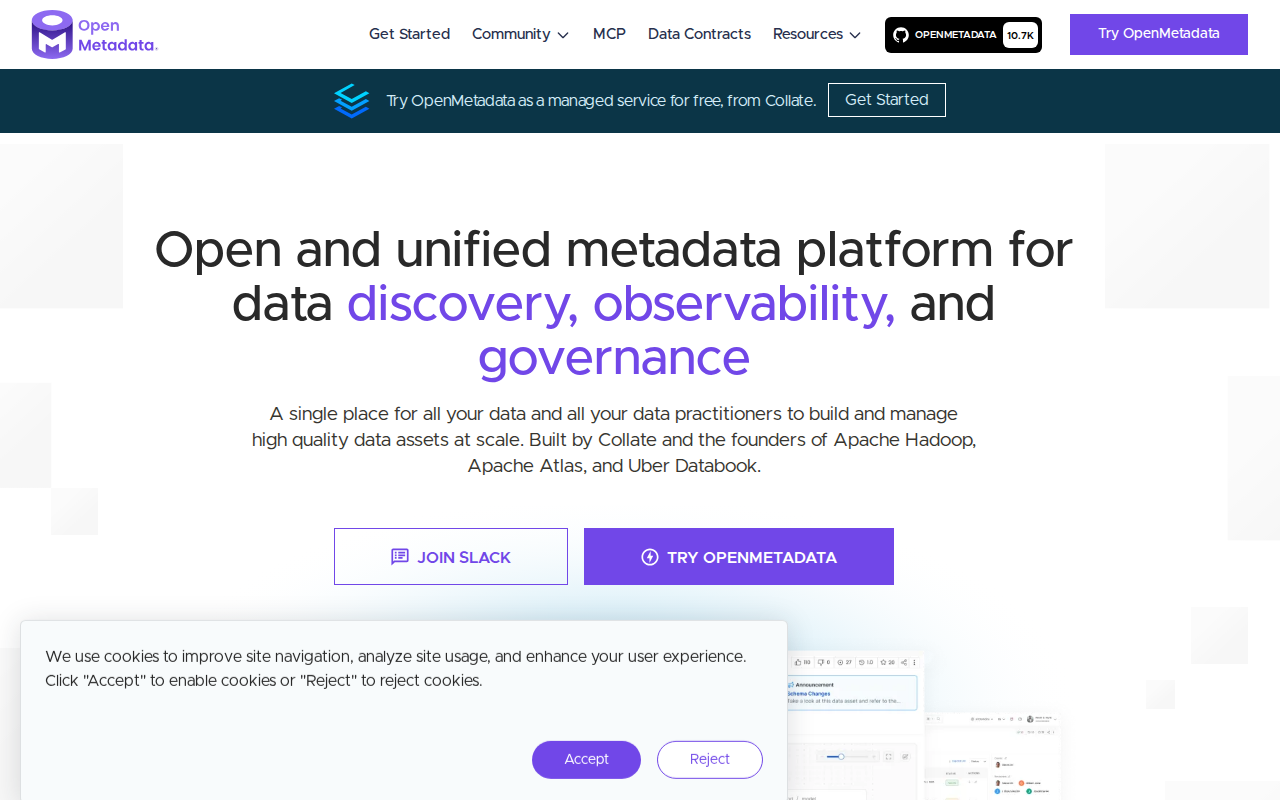
What is OpenMetadata: #1 Open Source Metadata Platform
OpenMetadata is an open-source, schema-first metadata platform that centralizes data discovery, observability, and governance. Unlike legacy tools that rely on fragmented silos, OpenMetadata utilizes a Unified Metadata Graph to connect data assets, pipelines, and users. Its architecture is built on a schema-first approach, ensuring high extensibility for custom entities. By integrating over 100+ connectors, it enables data teams to automate documentation, track lineage, and enforce quality standards, effectively bridging the gap between data producers and consumers in complex enterprise environments.
OpenMetadata: #1 Open Source Metadata Platform 's Core features
Unified Metadata Graph
Centralizes all metadata into a single graph structure, allowing for complex relationship mapping between data assets, pipelines, and users. Unlike relational-only catalogs, this graph-based approach enables deep impact analysis and lineage tracking across heterogeneous systems, providing a 360-degree view of the data ecosystem that is essential for modern data observability.
Schema-First Architecture
Built on JSON Schema, this approach ensures that all metadata entities are strictly typed and extensible. It allows developers to define custom metadata fields and relationships without breaking core platform functionality. This technical rigor ensures consistency across the platform, making it significantly easier to integrate with CI/CD pipelines and automate data governance workflows compared to traditional, rigid metadata repositories.
100+ Turnkey Connectors
Provides native support for over 100 data sources, including cloud warehouses, BI tools, and orchestration engines. These connectors automate the ingestion of technical, operational, and business metadata. By reducing the manual overhead of metadata collection, teams can achieve full platform visibility in hours rather than weeks, ensuring that the catalog remains synchronized with the actual state of the data infrastructure.
Automated Data Lineage
Automatically extracts and visualizes data flow from source to destination by parsing SQL queries and pipeline logs. This feature provides end-to-end visibility, helping data engineers identify the root cause of pipeline failures and understand the downstream impact of schema changes. It eliminates the 'black box' effect in data processing, fostering trust among stakeholders who rely on accurate, up-to-date data products.
Collaborative Data Governance
Integrates governance directly into the workflow by allowing users to assign owners, define tags, and document data assets in-place. It supports 'Data Contracts' to enforce quality standards at the source. By treating metadata as a collaborative asset, it shifts the responsibility of data quality from a central team to the data producers themselves, significantly improving the overall reliability of the organization's data assets.
How to use OpenMetadata: #1 Open Source Metadata Platform
- Deploy the OpenMetadata server via Docker Compose or Kubernetes using the official Helm charts.,2. Configure the backend database (MySQL or PostgreSQL) and search engine (Elasticsearch or OpenSearch) in the configuration YAML.,3. Access the UI at http://localhost:8585 and create an admin account to initialize the workspace.,4. Navigate to 'Services' and add a new connector (e.g., Snowflake, BigQuery, or Airflow) by providing connection credentials.,5. Schedule ingestion workflows to automatically pull metadata, lineage, and profiling data into the Unified Metadata Graph.,6. Invite team members and assign ownership to specific data assets to begin collaborative documentation and governance.
Use cases of OpenMetadata: #1 Open Source Metadata Platform
Data Discovery for Analysts
Data analysts use the platform to search for verified datasets across the enterprise. By viewing schema details, sample data, and usage metrics, they can quickly identify the right tables for their BI dashboards, reducing time-to-insight and preventing the use of stale or incorrect data.
Root Cause Analysis for Engineers
Data engineers leverage the lineage graph to trace the origin of corrupted data. When a dashboard fails, they can instantly identify which upstream pipeline or source table is the culprit, drastically reducing Mean Time to Resolution (MTTR) for data incidents.
Automated Compliance Auditing
Governance teams use automated tagging and ownership tracking to ensure PII data is identified and protected. The platform provides a clear audit trail of who owns which data asset and how it is being accessed, simplifying compliance with regulations like GDPR and CCPA.
Who benefits from OpenMetadata: #1 Open Source Metadata Platform
Data Engineers
Need to manage complex pipelines and ensure data reliability. OpenMetadata provides them with automated lineage and observability tools to maintain high-quality data infrastructure without manual documentation.
Data Analysts
Require quick access to trustworthy data. They use the platform to discover relevant assets, understand business context, and verify data quality before building reports or models.
Data Governance Leads
Responsible for data security and compliance. They use the platform to enforce data standards, manage access, and maintain a clear inventory of all enterprise data assets.
Pricing of OpenMetadata: #1 Open Source Metadata Platform
Open Source (Apache 2.0). Managed service provided by Collate with a free tier and custom Enterprise pricing based on scale and support requirements.