PicoClaw
Ultra-Lightweight AI Assistant
Free
Support platforms
web
What is PicoClaw
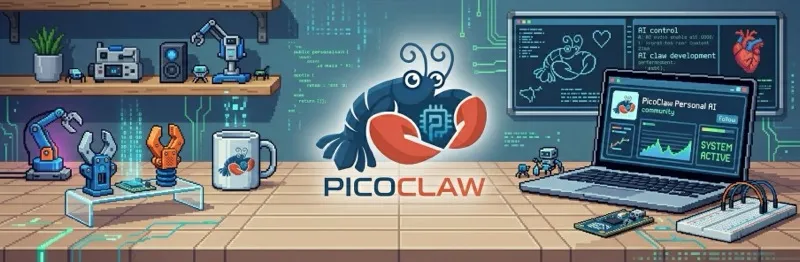
PicoClaw is an ultra-lightweight, self-hosted AI assistant designed for resource-constrained environments like Raspberry Pi and RISC-V devices. Written in Go, it offers a single-binary deployment with a memory footprint under 10MB and a startup time of less than 1 second. This makes it significantly faster and smaller than comparable AI assistant solutions. PicoClaw supports multiple LLMs (OpenAI, Claude, DeepSeek) and integrates with over 16 chat channels, including Telegram, Discord, and Slack. It's ideal for developers and hobbyists seeking a lightweight, versatile, and self-hosted AI assistant for various platforms, including Linux, Android, and Docker.
PicoClaw 's Core features
Ultra-Lightweight Design
PicoClaw boasts an incredibly small memory footprint, consuming less than 10MB of RAM. This efficiency is achieved through its Go-based architecture and optimized code. This allows it to run smoothly on low-powered devices like Raspberry Pi Zero, which often struggle with resource-intensive applications. This contrasts sharply with other AI assistants that can require hundreds of MB of RAM.
Blazing Fast Startup
PicoClaw starts in under 1 second, even on a 0.6GHz single-core processor. This rapid startup time is a direct result of the Go programming language's efficiency and the absence of external dependencies. This is a significant advantage over many Python-based AI assistants that can take several seconds to initialize, making PicoClaw ideal for interactive and real-time use cases.
Multi-LLM Support
PicoClaw supports multiple Large Language Models (LLMs), including OpenAI, Claude, and DeepSeek. This flexibility allows users to choose the LLM that best suits their needs and budget. The configuration is straightforward, typically involving setting API keys. This multi-LLM support ensures users are not locked into a single provider and can experiment with different models.
Extensive Chat Channel Support
PicoClaw integrates with over 16 chat channels, including popular platforms like Telegram, Discord, Slack, and more. This broad compatibility allows users to access their AI assistant from their preferred communication tools. This extensive channel support makes PicoClaw a versatile solution for various communication workflows and team collaboration scenarios.
Self-Hosted and Portable
PicoClaw is designed for self-hosting and supports a wide range of platforms, including Raspberry Pi, RISC-V, Linux, Android (via APK or Termux), and Docker. This portability allows users to maintain full control over their data and privacy. The single-binary deployment simplifies installation and management across different hardware configurations.
How to use PicoClaw
- Download the PicoClaw binary for your target platform from the official website or GitHub releases.,2. Ensure you have Go installed on your system if you intend to build from source (optional).,3. Configure your desired LLM provider (e.g., OpenAI, Claude) by setting the appropriate API keys in the configuration file or environment variables.,4. Run the PicoClaw binary. It will automatically start and connect to the configured chat channels.,5. Interact with PicoClaw through your preferred chat platform (Telegram, Discord, etc.) by sending messages.,6. Explore the available commands and features, such as web search and scheduled tasks, to enhance your AI assistant's capabilities.
Use cases of PicoClaw
Personal AI Assistant on Raspberry Pi
A hobbyist uses PicoClaw on a Raspberry Pi to manage their schedule, answer questions, and control smart home devices. They benefit from the low resource requirements, allowing the AI assistant to run continuously without impacting the performance of other applications on the Pi.
Team Collaboration in Slack
A development team integrates PicoClaw with their Slack workspace to provide quick access to code documentation, answer technical questions, and summarize meeting notes. This improves team productivity by centralizing information and automating repetitive tasks.
Self-Hosted AI Chatbot for Privacy
A privacy-conscious user deploys PicoClaw on a local server to have a private AI chatbot that doesn't send their data to external services. They can use it for research, content creation, or simply for having a private conversation without data tracking.
AI-Powered Automation on Android
A user installs PicoClaw on their Android device via Termux to automate tasks, such as sending SMS messages, controlling apps, or accessing information. The lightweight nature of PicoClaw ensures minimal battery drain and smooth performance on mobile devices.
Who benefits from PicoClaw
Raspberry Pi Enthusiasts
Raspberry Pi enthusiasts benefit from PicoClaw's ability to run efficiently on low-powered hardware. They can easily integrate an AI assistant into their projects, enhancing functionality without performance bottlenecks.
Developers and DevOps
Developers and DevOps teams can use PicoClaw to create custom AI-powered tools, automate tasks, and integrate AI capabilities into existing workflows. The lightweight nature and multi-platform support make it ideal for various development environments.
Privacy-Conscious Users
Individuals concerned about data privacy can self-host PicoClaw to maintain control over their data and interactions with an AI assistant. This offers a secure and private alternative to cloud-based AI services.
Hobbyists and Makers
Hobbyists and makers can leverage PicoClaw to experiment with AI on various platforms, from embedded systems to home servers. Its ease of use and low resource requirements make it accessible for a wide range of projects.
Pricing of PicoClaw
Free and open-source under the MIT License. No paid plans or tiers are mentioned.