Strapi
Node.js Headless CMS
Freemium
Support platforms
web
What is Strapi
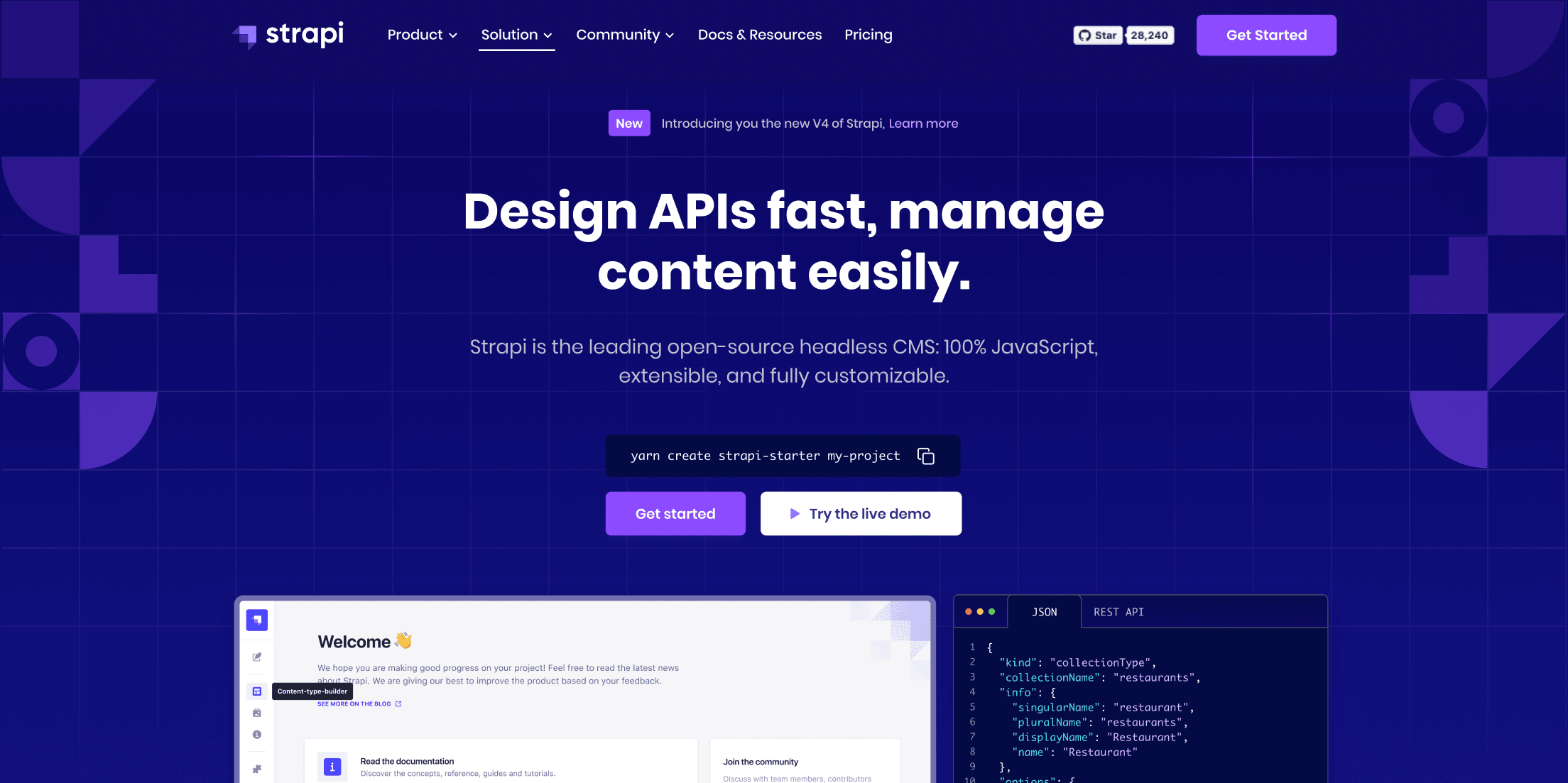
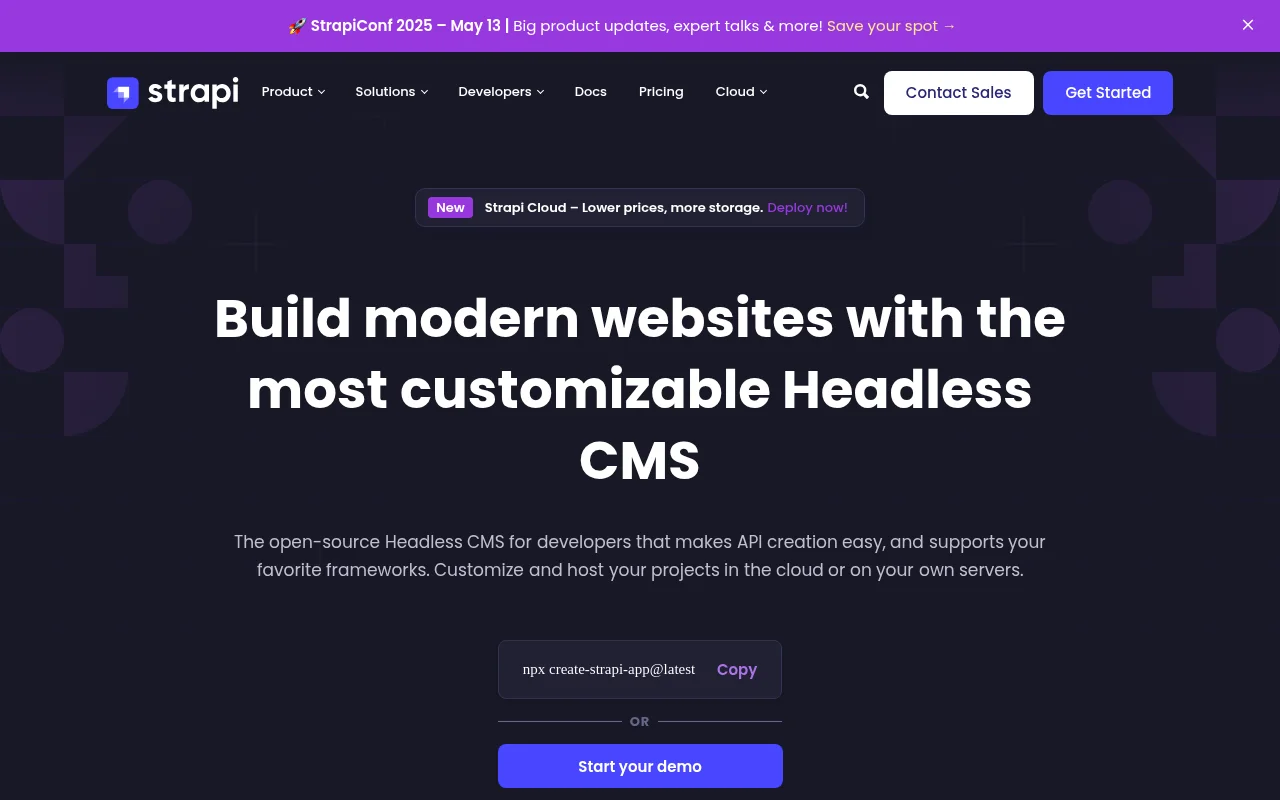
Strapi is an open-source, Node.js-based headless CMS that decouples content management from the frontend presentation layer. Unlike traditional monolithic CMS platforms, Strapi provides a customizable API-first architecture, allowing developers to expose content via REST or GraphQL to any digital device or framework. Built on a plugin-oriented architecture, it offers deep customization of the admin panel and data models. It is ideal for developers seeking full control over their data schema and infrastructure, supporting both self-hosted deployments and managed cloud environments.
Strapi 's Core features
Customizable Content API
Strapi automatically generates fully documented REST and GraphQL APIs based on your defined content models. This eliminates the need for manual boilerplate code. Developers can extend these APIs by injecting custom controllers, services, or middleware, providing the flexibility to handle complex business logic that standard CMS platforms often restrict.
Plugin-Oriented Architecture
The platform is built on a modular system where every feature is a plugin. You can install official plugins for SEO, documentation, or internationalization, or build custom plugins using the Strapi CLI. This modularity ensures that the core remains lightweight while allowing developers to add specific functionality without bloating the codebase.
Visual Content Modeling
The Content-Type Builder provides a drag-and-drop interface to define complex data structures, including relations, components, and dynamic zones. This visual approach accelerates development cycles by allowing teams to iterate on data schemas in minutes, which are then instantly reflected in the API response structure.
Database Agnostic Support
Strapi supports multiple database engines including PostgreSQL, MySQL, MariaDB, and SQLite. This allows teams to start with SQLite for rapid prototyping and seamlessly migrate to enterprise-grade databases like PostgreSQL for production environments without changing the application logic, ensuring scalability and consistency across the development lifecycle.
Integrated Role-Based Access
Strapi includes a robust Role-Based Access Control (RBAC) system out of the box. You can define granular permissions for different user groups, controlling access to specific content types or API endpoints. This is critical for enterprise teams where content editors, developers, and administrators require different levels of system access.
How to use Strapi
- Initialize a new project by running 'npx create-strapi@latest my-project' in your terminal.,2. Select the 'Quickstart' installation to automatically configure a local SQLite database.,3. Access the admin panel at http://localhost:1337/admin to create your first Administrator account.,4. Use the Content-Type Builder to define your data schema (e.g., Articles, Authors) via the UI.,5. Set permissions in the 'Settings' menu to expose your API endpoints to public or authenticated users.,6. Fetch your content using the generated REST or GraphQL endpoints in your frontend application.
Use cases of Strapi
Omnichannel Content Hub
Marketing teams use Strapi as a single source of truth to manage content for mobile apps, websites, and IoT devices. By using the GraphQL API, they push consistent content across all platforms simultaneously, reducing manual updates and ensuring brand consistency.
E-commerce Product Management
Developers build custom product catalogs by defining complex relations between categories, variants, and inventory data. Strapi’s API allows the frontend to fetch specific product data efficiently, enabling fast, dynamic shopping experiences.
Internal Documentation Portals
Technical teams use Strapi to host internal documentation or knowledge bases. By leveraging the rich text editor and custom content types, they create structured, searchable documentation that is easily updated via the admin panel.
Who benefits from Strapi
Frontend Developers
They need a flexible backend that doesn't dictate their frontend framework. Strapi allows them to use React, Vue, or Next.js while consuming content via clean, predictable APIs.
Content Managers
They require an intuitive, non-technical interface to create, edit, and publish content without needing to touch code, allowing them to manage site updates independently.
Enterprise Architects
They look for a secure, self-hostable solution that integrates into existing CI/CD pipelines and supports complex, high-scale infrastructure requirements.
Pricing of Strapi
Open source (MIT). Strapi Cloud offers a Free tier for hobbyists, Pro at $29/mo for teams, and Enterprise plans with custom pricing and SSO.