Anki
Intelligent Flashcard Software
Free
Support platforms
web
What is Anki
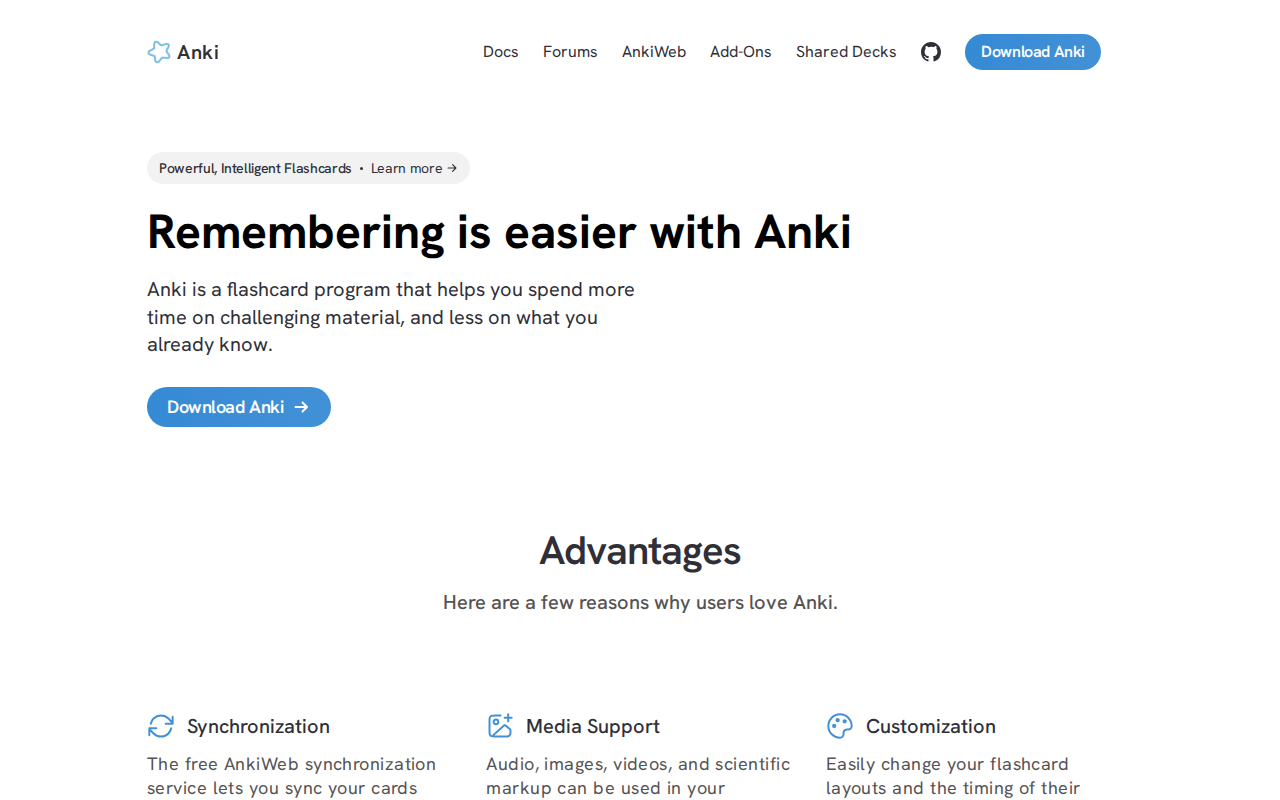
Anki is a powerful, intelligent flashcard program designed to optimize learning and memorization. It utilizes spaced repetition, a scientifically proven method that schedules reviews based on your recall performance, ensuring you spend more time on challenging material and less on what you already know. Unlike traditional flashcard systems, Anki supports multimedia, including audio, images, and videos, enriching the learning experience. Its open-source nature allows for extensive customization through add-ons and deck sharing. Anki's synchronization feature enables seamless access across multiple devices, making it a versatile tool for students, language learners, and anyone seeking to improve memory retention.
Anki 's Core features
Spaced Repetition Algorithm
Anki's core strength lies in its spaced repetition algorithm. This algorithm intelligently schedules flashcard reviews based on your past performance. Cards you struggle with are shown more frequently, while those you easily recall are reviewed less often. This personalized approach maximizes learning efficiency and long-term retention, reducing wasted study time.
Multimedia Support
Enhance your flashcards with rich media. Anki supports the inclusion of audio, images, videos, and even LaTeX-formatted scientific notation. This multimedia capability caters to diverse learning styles and subjects, making complex concepts easier to grasp. For example, language learners can include audio pronunciations, and science students can incorporate diagrams.
Cross-Platform Synchronization
Access your flashcards anywhere, anytime. AnkiWeb provides a free synchronization service that allows you to sync your decks across all your devices (desktop, mobile). This ensures your learning progress is always up-to-date and accessible, whether you're studying at home, on the go, or in a classroom. Synchronization is automatic and seamless.
Customizable Card Layouts
Tailor your flashcards to your specific needs. Anki allows you to customize the appearance and layout of your flashcards. You can modify the font, colors, and overall design to create a visually appealing and effective learning environment. This customization extends to the review process, where you can adjust the intervals and options.
Extensive Add-on Ecosystem
Extend Anki's functionality with add-ons. A vibrant community of developers creates add-ons that add new features and capabilities. These add-ons can range from improved statistics and review modes to specialized card types and integrations with other learning tools. This open ecosystem allows users to personalize their learning experience.
How to use Anki
- Download and install Anki on your preferred platform (Windows, macOS, Linux, Android, or iOS) from the official website.,2. Create a new deck to organize your flashcards by subject or topic.,3. Add flashcards by entering questions on the front and answers on the back. Include media like images or audio if needed.,4. Begin reviewing your flashcards. Rate your recall using the provided options (Again, Hard, Good, Easy).,5. Anki's algorithm will schedule future reviews based on your performance, optimizing your learning curve.,6. Explore and install add-ons to enhance functionality, such as enhanced statistics or custom card types.
Use cases of Anki
Medical Students
Medical students use Anki to memorize vast amounts of information, including anatomy, physiology, and pharmacology. They create flashcards with diagrams, images, and audio to aid in recall. The spaced repetition algorithm helps them retain complex medical concepts efficiently, preparing them for exams and clinical practice.
Language Learners
Language learners utilize Anki to build vocabulary and grammar skills. They create flashcards with words, phrases, and example sentences, often including audio pronunciations. The spaced repetition system helps them memorize new words and improve their fluency. They can also share decks with other learners.
Students Preparing for Exams
Students across various disciplines use Anki to prepare for exams. They create flashcards based on their study materials, covering key concepts and facts. The program's intelligent scheduling helps them focus on areas where they struggle, ensuring efficient and effective exam preparation.
Anyone Memorizing Facts
Anyone needing to memorize facts, from trivia enthusiasts to professionals, can use Anki. Users create flashcards for any subject, from historical dates to technical specifications. The spaced repetition algorithm ensures efficient memorization, making it ideal for long-term retention of information.
Who benefits from Anki
Students
Students benefit from Anki's ability to efficiently memorize large amounts of information for exams and coursework. The spaced repetition algorithm optimizes study time, allowing them to focus on challenging material and improve overall academic performance.
Language Learners
Language learners can use Anki to build vocabulary, learn grammar, and improve pronunciation. The multimedia support and spaced repetition system make it an effective tool for mastering a new language. The ability to share decks also facilitates collaborative learning.
Medical Professionals
Medical professionals and students can use Anki to memorize complex medical terminology, anatomy, and pharmacology. The spaced repetition algorithm helps them retain critical information for exams and clinical practice, ensuring they can provide the best possible patient care.
Lifelong Learners
Lifelong learners can use Anki to acquire knowledge in any subject. Whether it's history, science, or a hobby, Anki's spaced repetition system helps them retain information effectively, making learning a more efficient and enjoyable experience.
Pricing of Anki
Free and open-source software, licensed under the GNU AGPL v3. AnkiMobile (iOS) is a paid app to support development.